#4 – 20133 102nd Avenue, Langley, B.C. V1M 4B4 Canada

#4 – 20133 102nd Avenue, Langley, B.C. V1M 4B4 Canada
The global search for reliable injection mold making partners is becoming more demanding. Buyers now compare precision, material expertise, production capacity, validation records, and after-sales support. Price still matters. It is not enough.
Grand View Research reported that the global injection molded plastics market reached approximately USD 387.54 billion in 2022. The same report projects a compound annual growth rate of 4.6% from 2023 to 2030. These figures show strong demand for molds serving automotive, medical, electronics, packaging, and consumer products. However, market size does not prove supplier quality. Report scopes and methods vary.
John Bozzelli, founder of Injection Molded Solutions and a respected scientific molding trainer, has often stressed, “The best way to solve a molding problem is to prevent it.” That principle matters when evaluating international mold makers. Strong companies review part geometry, cooling layouts, steel selection, mold-flow risks, and maintenance access before cutting steel. They also provide measurable evidence, such as CMM inspection reports, trial records, process data, and documented corrective actions.
This guide examines leading injection mold making companies for global buyers. It considers engineering depth, tooling complexity, export experience, quality systems, delivery control, and lifecycle value. Certifications can help. They cannot replace factory-level verification.
A polished website proves little.
Buyers should request sample reports, inspect comparable projects, and clarify ownership of design data. No supplier is perfect, and even experienced teams can underestimate cooling or late design changes. That reality deserves attention. The strongest partner is not merely the cheapest or largest. It is the one that identifies risks early, communicates clearly, and produces stable molds under real production conditions.
Source: Grand View Research, Injection Molded Plastics Market Size, Share & Trends Analysis Report, 2023–2030.
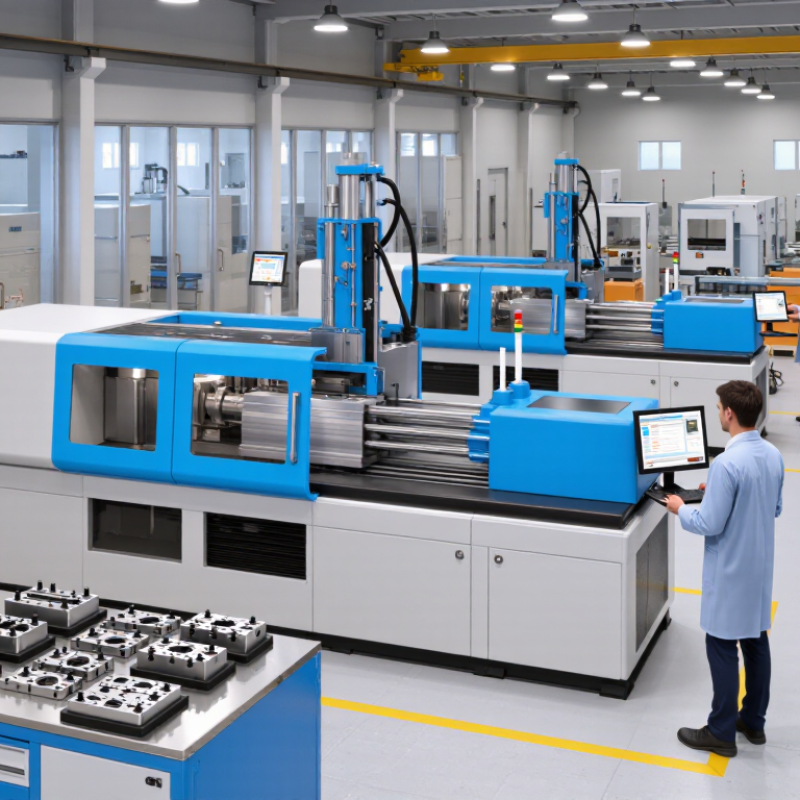
Injection mold making serves automotive, electronics, medical devices, packaging, and household products. From 2024 to 2030, demand should grow with lightweight parts, connected products, and regional manufacturing. Forecasts vary widely, so buyers should avoid treating one market figure as fact. A credible benchmark compares annual tool output, average lead time, cycle consistency, and repair response.
Higher growth is expected in precision tooling, multi-material molding, and molds designed for recycled resins. Digital simulation can reduce trial shots and locate cooling problems before steel cutting. Still, software does not replace practical mold experience. A tool may pass its first test and fail after repeated production. That risk deserves attention. Buyers should review tool-life records, inspection methods, steel certificates, and documented sample approvals.
Tips: Request a 2024 baseline and clear 2030 targets. Measure cycle time, dimensional variation, scrap rate, and maintenance hours. Ask for evidence from similar part geometries, not attractive promises. Include spare inserts and service training in the contract. Regional support can shorten downtime, although it may increase initial sourcing costs. That trade-off is often overlooked.
Ranking Top Mold Makers by ISO 9001, T1 Lead Time, and PPM Data
A serious mold-maker ranking should begin with verified evidence, not polished claims. The ISO Survey 2022 recorded 1,265,216 ISO 9001 certificates across 183 countries. Certification shows a documented quality system, but it does not guarantee accurate molds or stable production. Buyers should verify certificate scope, audit dates, corrective-action records, and manufacturing processes.
T1 lead time deserves equal attention. A supplier promising 25 days may exclude steel approval, design changes, sampling, or ocean transport. Define T1 clearly, then compare quoted days with actual first-trial records from the previous twelve months. Practical evaluation should include mold-flow analysis, machining capacity, trial equipment, and response time after dimensional failure. Shorter is not always better.
PPM data exposes the uncomfortable part. Public industry reports rarely provide a universal mold-specific PPM median, so supplier comparisons can become misleading. Use the Automotive Industry Action Group’s PPAP and measurement principles to request defect definitions, shipped quantities, and customer-return records. A supplier reporting 180 PPM from ten thousand parts is not comparable with 180 PPM from two million parts. The number needs context.
A balanced scorecard might assign 30% to ISO evidence, 30% to verified T1 performance, and 40% to normalized PPM. Keep exceptions visible. One missed launch can matter more than a beautiful average. Data is useful, but never complete.
Top Injection Mold Making Companies for Global Buyers
Precision is not a slogan; it is a measurement process. A serious mold maker should verify critical dimensions near ±0.01 mm with calibrated CMM equipment. That tolerance suits selected inserts, shutoffs, and alignment features, but not every mold surface.
According to Plastics Europe’s Plastics – the Fast Facts 2024, global plastics production reached 413.8 million tonnes in 2023. Such volume increases pressure on mold consistency, maintenance, and replacement planning.
Tool life needs equal scrutiny. A 1M+ cycle benchmark should identify resin type, glass content, injection pressure, cooling conditions, and maintenance intervals. Abrasive glass-filled materials can wear gates and slides much faster than standard polypropylene. Ask for steel certificates, hardness records, mold-flow analysis, and documented dimensional reports. Request a production trial with actual resin, not only a showroom sample. The difference can be substantial.
The benchmark is conditional.
From practical tooling reviews, cycle claims often exclude polishing repairs, vent cleaning, and unplanned insert replacement. That omission deserves a direct question. Buyers should also check repeatability after thermal expansion, because a mold may measure correctly at room temperature yet shift during production.
I would treat ±0.01 mm and 1M+ cycles as engineering targets, not guarantees. A reliable supplier explains where the promise ends, records what changed, and accepts that the first design may need revision.
Reliability is visible in evidence, not impressive wording.
Global buyers comparing injection mold makers should examine capability, not country labels alone. China often offers broad supplier capacity, competitive pricing, and fast production for automotive, medical, and consumer parts. Japan is known for disciplined process control, precise finishing, and stable long-term performance. Germany typically emphasizes engineering documentation, high-end tooling, and dependable automation. U.S. suppliers often provide strong design collaboration, local communication, and easier support for domestic projects.
The practical differences appear on the factory floor. A Chinese workshop may run several CNC machines and manage complex export schedules efficiently. Japanese teams may inspect mold components repeatedly, even when tolerances seem acceptable. German engineers often document cooling layouts, steel selection, and maintenance intervals in detail. U.S. mold makers can reduce time-zone delays during design changes. However, these patterns are not guarantees. A smaller supplier may outperform a famous regional standard. That is worth remembering.
Tips: Request sample inspection reports, mold-flow analysis, steel certificates, and maintenance records. Ask who owns the tool design and controls revision changes. Compare cycle-time targets with actual trial data, not promises. Visit the facility when possible. Check whether the supplier can support spare inserts, repairs, and production changes after delivery. A low quotation may hide limited after-sales capacity. Reliability is proven slowly, through clear records and consistent communication.
Manufacturing value added is used as a country-level proxy for industrial scale and production capacity.
China has the largest manufacturing base among the four markets, while the United States, Japan, and Germany combine substantial industrial capacity with strong engineering, automation, precision manufacturing, and quality-control ecosystems. Manufacturing value added indicates overall industrial scale and should be combined with supplier audits, mold trials, certifications, tooling lead times, and after-sales support when selecting an injection mold partner.
Data source: World Bank, Manufacturing, value added (current US$), 2022; values rounded to two decimal places.
For global buyers, mold selection should begin with evidence, not glossy samples. A capable maker reviews parting lines, draft angles, wall thickness, shrinkage, and cooling before quoting. This DFM review can prevent late steel changes and uneven gloss. Grand View Research valued the global injection molded plastics market at approximately USD 387.5 billion in 2023, showing how small design errors can scale into costly production waste.
Ask which steel grade matches the expected shot count, resin, and surface finish. P20 may suit moderate runs, while hardened tool steel can justify higher volumes and abrasive materials. Request heat-treatment records, hardness results, cavity measurements, and a realistic warranty. For automotive or regulated programs, PPAP evidence should include dimensional reports, material certificates, process-flow charts, control plans, and capability studies. The requirements may vary by customer. Confirm them in writing.
Tips:
Compare total cost, not only the mold price. Include engineering revisions, sampling, freight, maintenance, spare inserts, downtime, and rejected parts. PlasticsEurope reported global plastics production of 413.8 million tonnes in 2023, making material efficiency and scrap control commercially important. A supplier promising unlimited warranty coverage sounds attractive, but exclusions matter more. I would also ask for a pilot-run video and independent inspection access. Some buyers skip this step. That is a mistake worth reconsidering.