#4 – 20133 102nd Avenue, Langley, B.C. V1M 4B4 Canada

#4 – 20133 102nd Avenue, Langley, B.C. V1M 4B4 Canada
Set Screws play a crucial role in mechanical engineering. They secure the relationships between moving parts in various applications. According to a recent industry report from Market Research Future, the global fasteners market is projected to reach $102 billion by 2027, with set screws representing a significant segment of this growth.
Many engineers undervalue set screws, yet they are essential for reliability and efficiency. Set screws come in various types, each serving specific functions. For instance, a hex socket set screw can provide stronger grip and precise adjustments. Interestingly, 47% of engineering failures relate to inadequate fastening techniques, highlighting the importance of proper set screw selection.
Understanding the diverse types of set screws is vital. Each type offers unique advantages for different applications. Ignoring these details can lead to costly errors and machinery failures. Important considerations include material type, thread size, and application environment. Not all set screws are created equal, and recognizing their nuances can enhance overall operation and safety.
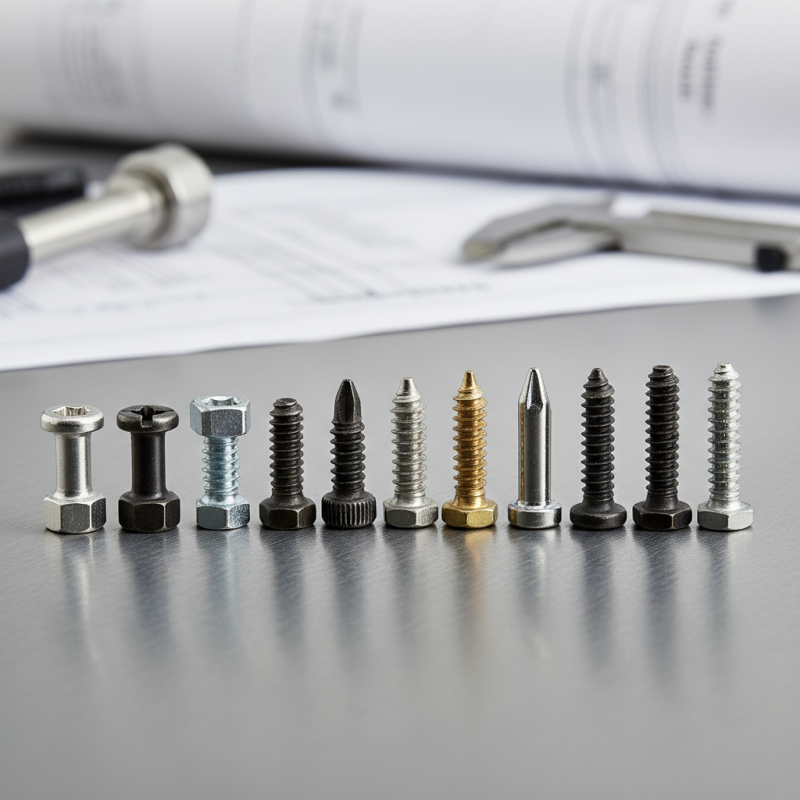
Set screws are crucial components in mechanical assemblies. They secure one part of a machine to another without the use of external components like nuts or bolts. Set screws help prevent relative movement between mechanical parts. They often fit into a threaded hole. When tightened, they press against an object to keep it in place. This includes securing collars, gears, and pulleys. Understanding their function is essential for anyone working with machinery.
Tips: Always choose the right type of set screw for your application. Different materials and designs impact performance. Be cautious; improper installation can lead to failures. Tightening a screw too much can damage the components. Conversely, a loose screw may cause machinery to malfunction.
Consider the type of environment your equipment operates in. Some set screws resist corrosion better than others. Ensure that you do regular checks on your machinery. A well-maintained machine can save time and money. Neglecting set screws may lead to larger issues down the line. Understanding set screws and their correct usage enhances mechanical reliability.
| Set Screw Type | Description | Common Use | Material |
|---|---|---|---|
| Flat Point Set Screw | Features a flat tip that provides a strong hold. | Securing gears and pulleys. | Steel, Stainless Steel |
| Cup Point Set Screw | Has a concave tip for a secure grip on shafts. | Locking rotating parts. | Steel, Alloy Steel |
| Cone Point Set Screw | Designed with a cone-shaped tip for self-centering. | Mounting applications. | Steel, Stainless Steel |
| Half Cone Point Set Screw | Features a flat base with a conical top. | Adjustable mounting connections. | Steel |
| Square Point Set Screw | With a square tip to maximize surface contact. | High torque applications. | Steel |
| Threaded Point Set Screw | Has threads on the tip for embedding into softer materials. | Securing soft components. | Steel |
| Ball Point Set Screw | Features a spherical end to minimize wear. | Precision locking. | Stainless Steel |
| Weld Set Screw | Intended for welding into place. | Permanent fixtures. | Steel |
| Locking Set Screw | Includes features to prevent loosening under vibration. | Critical applications in machinery. | Alloy Steel |
Set screws are versatile fasteners used in various applications. Understanding the different types of set screws is essential for proper use. Common types include cup point, flat point, and cone point screws. Each serves a unique purpose. For instance, cup point screws are ideal for securing components without causing damage.
Selecting the right type greatly affects performance. Consider the material and surface you are working with. Some screws grip better on softer materials, while others are suited for harder surfaces. Avoid unnecessary damage by testing on less critical pieces first.
Tips: Always keep an eye on screw length and thread type. A mismatched screw can lead to failure. In applications where vibration is present, using a locking mechanism can enhance grip. Experiment with variations to determine the best fit for your needs. Not every screw works perfectly the first time. Learning from each attempt is part of the process. Adjustments are often necessary to achieve optimal results.
When discussing set screws, the materials used in their manufacturing significantly impact performance and longevity. Most commonly, set screws are made from steel. This material is strong and can withstand considerable forces. According to industry reports, around 80% of set screws are created from various grades of steel, such as Carbon Steel and Alloy Steel. These materials offer excellent resilience in harsh environments.
Another notable material is stainless steel. It accounts for about 15% of set screw production. Stainless steel is preferred for applications exposed to moisture and corrosive substances. Its resistance to rust ensures reliability over time. Some manufacturers also offer brass and nylon set screws. Brass is often used in decorative or low-tension applications, while nylon is effective in protecting softer materials.
Tip: Always consider the operating environment when selecting materials. Using the wrong type may lead to premature failure. Assessing factors like corrosion resistance is crucial for longevity.
Keep in mind that while some materials seem advantageous, they may not suit all applications. A thorough understanding of material properties helps avoid costly mistakes. Testing in real-world conditions can provide valuable insights into performance. Be prepared to adapt and change your materials as needed.
Set screws play crucial roles across various industries. These small but mighty fasteners secure components in machinery, ensuring optimal performance. In automotive applications, set screws keep gears and pulleys in precise alignment. This prevents slippage during operation, which can cause inefficiencies. In manufacturing, they are vital for holding parts together in machines, contributing to operational stability.
In the electronics sector, set screws are essential for mounting circuit boards and securing housing covers. Their reliable grip protects sensitive components from vibrations. There are instances where improper installation can lead to failures. Ensuring the right type and size is vital for their effectiveness. In the furniture industry, set screws aid in assembling sturdy pieces that withstand stress. However, if they are not tightened properly, structural integrity may be compromised.
Understanding the specific application of each set screw type is essential. Different industries require varying lengths and materials for optimal performance. A thorough knowledge of these fasteners can prevent costly mistakes. Proper specifications and installation techniques matter greatly.
This chart illustrates the top 10 types of set screws and the corresponding number of applications across different industries. Socket set screws have the most applications, making them highly versatile, while patch lock set screws have the least. Understanding these various types can help in selecting the right fastener for specific industrial needs.
When choosing the right set screw, several factors come into play. Material selection is crucial. Steel, stainless steel, and brass are common choices. Each material offers unique properties. For instance, stainless steel resists corrosion, making it ideal for outdoor applications. Steel, however, often provides greater tensile strength. The choice of material can affect the performance and longevity of the screw in its intended environment.
Thread type is another key factor. Set screws often feature different thread designs, such as coarse or fine threads. Coarse threads excel in quick fastening. They provide better grip in softer materials. On the flip side, fine threads allow for more adjustments. A study from the Fastener Quality Act indicates that improper thread selection can lead to applications failing under stress. Ensuring compatibility between the screw and the materials involved can prevent costly repairs and enhance safety.
Moreover, head design matters significantly. Hex socket, slotted, and cup point are all popular. Each offers distinct advantages depending on the application. Hex socket heads provide better torque. Cup points help anchor into surfaces effectively but may not be as easy to install. Consider your specific needs and consult material specifications for optimal results. Your choice can enhance machine performance or lead to premature failure. Be mindful of these details for a robust installation.