#4 – 20133 102nd Avenue, Langley, B.C. V1M 4B4 Canada

#4 – 20133 102nd Avenue, Langley, B.C. V1M 4B4 Canada
Choosing among the top Aluminum Extrusion manufacturers requires more than comparing catalog prices. Global buyers must examine alloy control, die-making capability, surface treatment, quality systems, and delivery reliability. A polished website proves very little.
Dr. T. Sheppard, author of Extrusion of Aluminium Alloys, emphasized, “Successful extrusion depends on controlling the entire process, not merely operating the press.” This practical view still matters. A dependable supplier should explain billet chemistry, extrusion temperature, press capacity, dimensional tolerances, and inspection methods clearly. Buyers should also request recent test reports, sample profiles, and evidence of traceable production batches.
Small details reveal manufacturing discipline. Ask how a factory protects long profiles from scratches during packing. Check whether anodized samples show consistent color near corners and hollow sections. Review how the manufacturer manages die wear, profile distortion, and urgent design changes. These issues can affect construction frames, heat sinks, transport components, and industrial assemblies.
Certifications deserve careful review. ISO 9001 supports process consistency, but it does not guarantee every shipment will be perfect. Supplier audits, independent inspections, and documented corrective actions provide stronger evidence. Environmental reporting also matters when recycled aluminum, energy use, and carbon data influence purchasing decisions.
No ranking is permanent. Capacity can change. Lead times can slip. Even experienced buyers may overlook communication quality until a tooling problem appears. The strongest manufacturers combine engineering experience with honest limitations, stable production, responsive service, and realistic delivery commitments. This guide compares those qualities to help global buyers make a more informed, defensible decision.
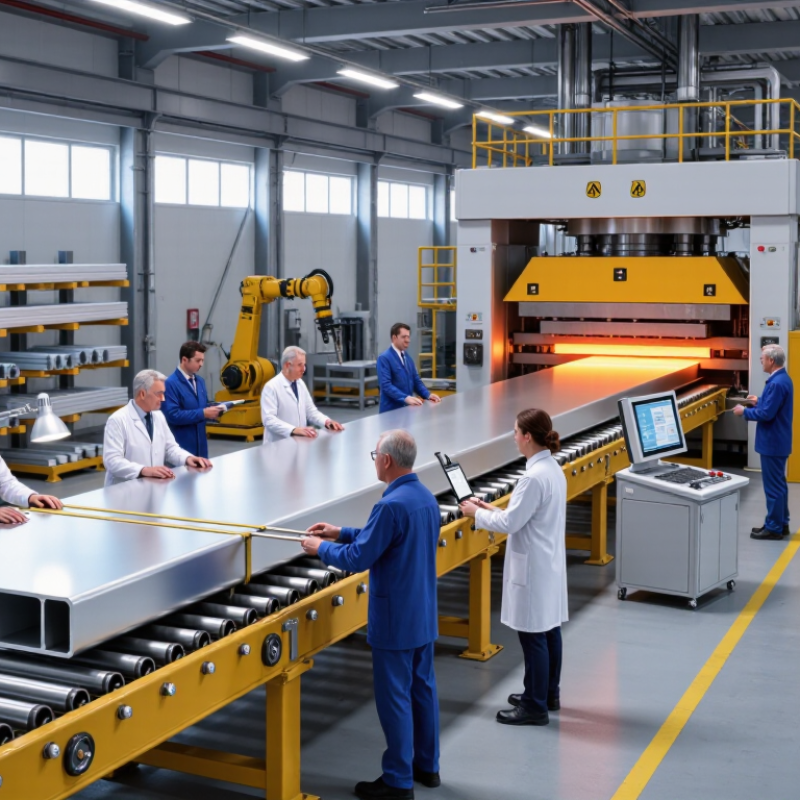
A leading aluminum extrusion manufacturer is defined by more than press capacity or a polished website. Global buyers need evidence from the shop floor. Experienced teams control billet heating, die alignment, quenching, stretching, and cutting with measured discipline. They understand how small temperature shifts can change wall thickness, surface finish, and alloy performance. Ask for production records, inspection methods, and samples from comparable profiles. Real experience appears in practical answers, not impressive promises.
Technical authority also depends on engineering support before production begins. A capable manufacturer reviews drawings, tolerances, joining methods, and the intended environment. That review may reveal a costly design weakness. However, recommendations should be documented, testable, and connected to recognized material standards. Reliable suppliers maintain traceability from billet heat numbers to final packing. They provide dimensional reports, surface checks, hardness data, and corrective-action records when something misses specification. Perfection is unlikely. A mature supplier admits limits and explains how problems will be corrected.
Tips: Request a pilot run before committing to volume. Compare first-article samples under consistent lighting and measurement conditions. Confirm packaging details, delivery capacity, communication routines, and change-control procedures. Do not judge quality from one attractive sample. Ask what happens after a failed inspection. The answer often exposes the difference between marketing and dependable manufacturing.
Global buyers increasingly assess aluminum extrusion manufacturers by consistency, not production volume alone. According to the International Aluminium Institute, global primary aluminum output reached about 70.6 million metric tons in 2023. This supply supports demand from construction, transportation, solar framing, and industrial equipment. Major manufacturers serving global markets must control alloy chemistry, die design, tolerances, finishing, and export documentation. A scratched six-meter profile can delay an entire installation.
A 2024 market assessment by Grand View Research valued the global aluminum extrusion market at roughly USD 78 billion in 2023. It also projected continued growth through 2030. These figures show strong market potential, but forecasts are not purchasing instructions. Energy costs, billet premiums, freight rates, and regional certification rules can quickly change landed prices.
Reliable producers usually provide ISO 9001 systems, batch traceability, mechanical test reports, and clear packing specifications.
For practical evaluation, buyers should compare alloy grades, temper conditions, wall thickness, straightness, anodizing thickness, and minimum order quantities. Profiles may look identical on a screen. They may perform differently on a construction site. Manufacturers with export experience should explain lead times, mold ownership, inspection points, and corrective procedures. Not every factory publishes rejection rates or capacity by alloy. That gap deserves attention. Supplier comparisons remain imperfect when technical evidence is incomplete.
Top aluminum extrusion manufacturers support global buyers with profiles designed for demanding industries. Their key products include standard channels, T-sections, square tubes, heat sinks, frames, and custom architectural shapes. Buyers can request alloys such as 6061 or 6063, depending on strength, finish, and machining needs. A practical supplier should provide dimensional drawings, alloy certificates, surface-finish samples, and realistic production tolerances.
Construction companies often use extrusions for window frames, curtain walls, doors, railings, and lightweight structural systems. Transportation manufacturers need strong profiles for vehicle frames, battery enclosures, and interior components. Electronics producers rely on finned heat sinks to move heat away from sensitive equipment. Solar projects may require mounting rails that resist outdoor exposure. From experience, these applications rarely share the same specifications. A profile that works well in construction may be unsuitable for thermal management.
Tips: Compare more than price. Review minimum order quantities, die charges, packaging methods, inspection records, and delivery planning. Ask how the manufacturer handles warping, scratches, and inconsistent anodizing. Small details matter. A trial batch can reveal problems before full production begins. Buyers should also confirm whether cutting, drilling, CNC machining, powder coating, or assembly is available. Not every top-rated supplier will fit every market, and that assumption deserves careful review. Sometimes a less obvious manufacturer offers better technical communication and steadier quality.
| Manufacturer Capability Group | Key Extruded Products | Common Aluminum Alloys | Value-Added Services | Primary Industries Supported | Commonly Referenced Standards |
|---|---|---|---|---|---|
| Architectural and Building-Systems Extruders | Window and door frames, curtain-wall profiles, façade sections, handrails, sunshade components, and partition systems | 6060, 6063, 6005A, and 6061 | Anodizing, powder coating, liquid painting, thermal-break assembly, cutting, drilling, machining, and fabrication | Construction, commercial buildings, residential development, façade engineering, and interior systems | EN 755, EN 12020, ASTM B221, ISO 7599, and AAMA-related architectural coating specifications |
| Industrial-Profile Extruders | Machine frames, structural profiles, conveyor rails, guards, heat sinks, channels, tubes, and custom engineering sections | 6061, 6063, 6005A, 6082, and 6060 | Precision cutting, CNC machining, tapping, milling, punching, assembly, deburring, and surface finishing | Automation, material handling, industrial equipment, robotics, electronics, and general engineering | ASTM B221, EN 755, EN 12020, ISO 2768, and ISO 9001 quality-management requirements |
| Automotive and Transportation Extruders | Crash-management sections, battery trays, seat structures, roof rails, heat-management parts, vehicle trim, and trailer components | 6005A, 6061, 6082, 6063, and selected 6xxx-series alloys | Stretch straightening, friction-stir or conventional welding support, CNC machining, joining, forming, and corrosion-protection finishing | Passenger vehicles, electric vehicles, commercial vehicles, rail systems, buses, trailers, and marine transport | IATF 16949 supplier requirements, ISO 9001, ASTM B221, EN 755, and customer-specific PPAP documentation |
| Electrical and Thermal-Management Extruders | LED heat sinks, inverter housings, busbar profiles, motor housings, electronic enclosures, and cooling channels | 6063, 6061, 6060, and high-conductivity aluminum grades where specified | High-tolerance extrusion, skiving or machining of thermal features, anodizing, insulation-compatible finishing, and assembly | Power electronics, telecommunications, lighting, renewable energy, battery systems, and data-center equipment | ASTM B221, EN 755, ISO 9001, IEC-related component requirements, and customer thermal-performance specifications |
| Solar and Renewable-Energy Extruders | Solar-panel mounting rails, support brackets, inverter frames, battery enclosures, and wind-energy equipment profiles | 6063, 6005A, 6061, and 6082 | Anodizing, powder coating, precision cutting, slotting, drilling, fastening-system integration, and kitting | Solar photovoltaic installations, energy storage, wind power, microgrids, and infrastructure projects | ASTM B221, EN 755, ISO 9227 corrosion testing, ISO 9001, and project-specific photovoltaic mounting requirements |
| Aerospace and High-Performance Extruders | Aircraft interior rails, seat tracks, structural channels, aerospace frames, and specialized lightweight sections | Selected 2xxx and 6xxx-series alloys, with 7xxx-series alloys used only where qualified and specified | Strict traceability, controlled heat treatment, non-destructive testing, precision machining, and documented process qualification | Aerospace interiors, aviation equipment, defense-related engineering, and high-performance transportation | AMS material specifications, ASTM B221 where applicable, AS9100 quality systems, and customer qualification requirements |
| Marine and Corrosion-Resistant Extruders | Boat rails, deck systems, marine frames, gangways, ladders, pontoons, and corrosion-resistant structural sections | 5083, 5086, 6061, 6082, and selected marine-grade 5xxx-series alloys | Anodizing, marine coating systems, welding preparation, cutting, bending, machining, and fabricated subassemblies | Shipbuilding, recreational boats, offshore equipment, coastal infrastructure, and water-treatment facilities | ASTM B221, EN 755, ISO 9227, marine classification requirements, and project-specific corrosion specifications |
| Global Custom-Extrusion Suppliers | Customer-designed profiles, hollow sections, multi-void tubes, small precision profiles, and hybrid extrusion assemblies | 6060, 6061, 6063, 6005A, 6082, and other alloy grades selected according to strength, conductivity, and corrosion needs | Die design, prototyping, sampling, mechanical testing, surface treatment, CNC fabrication, packaging, and export documentation | OEM components, contract manufacturing, industrial distribution, consumer products, infrastructure, and international project supply | ISO 9001, ASTM B221, EN 755, EN 12020, RoHS or REACH documentation where relevant, and buyer-specific inspection plans |
Note: Alloy selection, temper, dimensional tolerance, surface finish, certification, and testing requirements should be confirmed against the final engineering drawing and purchase specification.
Quality begins with controlled raw materials. Experienced manufacturers verify billet chemistry before production starts. They record alloy grades, furnace temperatures, and batch numbers. This evidence supports consistent strength and surface performance. ISO 9001 certification can indicate a structured quality system. However, buyers should inspect current certificates, not rely on old website claims. Details matter.
Reliable facilities use calibrated equipment throughout the process. Press capacity, die design, quenching control, and aging cycles affect final dimensions. Skilled engineers review wall thickness, corner radii, and tolerance requirements before tooling begins. In-process checks may include hardness testing, dimensional measurement, and visual inspection under bright lighting. A capable supplier can also provide anodizing, powder coating, cutting, drilling, and assembly. These services reduce handling between factories.
Traceability should continue after extrusion. Each bundle should carry an identifiable production code. Inspection reports should match that code and the buyer’s purchase order. Records should travel. Certifications such as ISO 14001 may show attention to environmental management, while product-specific declarations support market requirements. Still, certification does not replace practical evaluation. Request sample profiles, coating thickness results, packaging photographs, and recent test data. No supplier is flawless. Even strong producers may face die wear, color variation, or shipment delays. Honest communication about corrective actions often reveals more than polished marketing language.
Selecting an aluminum extrusion supplier requires more than comparing prices. Experienced buyers inspect alloy capability, die design, dimensional control, and production records. Ask whether the factory regularly produces profiles similar to yours. A supplier may list many alloys, yet lack stable control for thin walls or complex shapes.
Ask for recent inspection reports, material certificates, and sample profiles. Numbers reveal capacity. Check tolerances with calipers and review surface marks under normal lighting. Confirm whether the supplier can support anodizing, powder coating, cutting, drilling, and protective packaging. These details affect real project costs. A low quotation can become expensive after rework, sorting, or delayed deliveries.
Factory communication also deserves careful evaluation. Request a clear production schedule, packaging photos, and a documented response process for defects. An on-site or virtual audit can reveal maintenance habits, storage conditions, and worker attention. I have found that practical evidence is more useful than polished presentations. Still, no audit predicts everything. Trial orders remain wise. Compare the first shipment with approved samples, especially at joints, corners, and cut ends. A supplier that admits limitations may prove more reliable than one promising perfection.