#4 – 20133 102nd Avenue, Langley, B.C. V1M 4B4 Canada

#4 – 20133 102nd Avenue, Langley, B.C. V1M 4B4 Canada
Cylindrical Gearboxes are essential components in various industries, often governing machinery efficiency and performance. According to a recent report by Research and Markets, the global gearbox market is projected to reach USD 28.93 billion by 2026, with cylindrical gearboxes playing a significant role in this growth. These gearboxes are designed for smooth power transmission, offering high torque and durability.
Understanding how a cylindrical gearbox operates is crucial for engineers and manufacturers alike. They utilize two or more cylindrical gears, which mesh to transmit power effectively. This design is favored for its simplicity and reliability in applications such as conveyor systems, automotive gear systems, and industrial machinery. Nevertheless, challenges exist. Maintenance can be cumbersome, and misalignment may lead to failure.
Despite their advantages, cylindrical gearboxes are not universally ideal. Their efficiency depends on correct installation and alignment. A slight deviation can result in increased wear and tear. Being aware of these potential pitfalls is vital for optimizing their performance. Balancing efficiency and maintenance remains a key focus area in ongoing research and development.
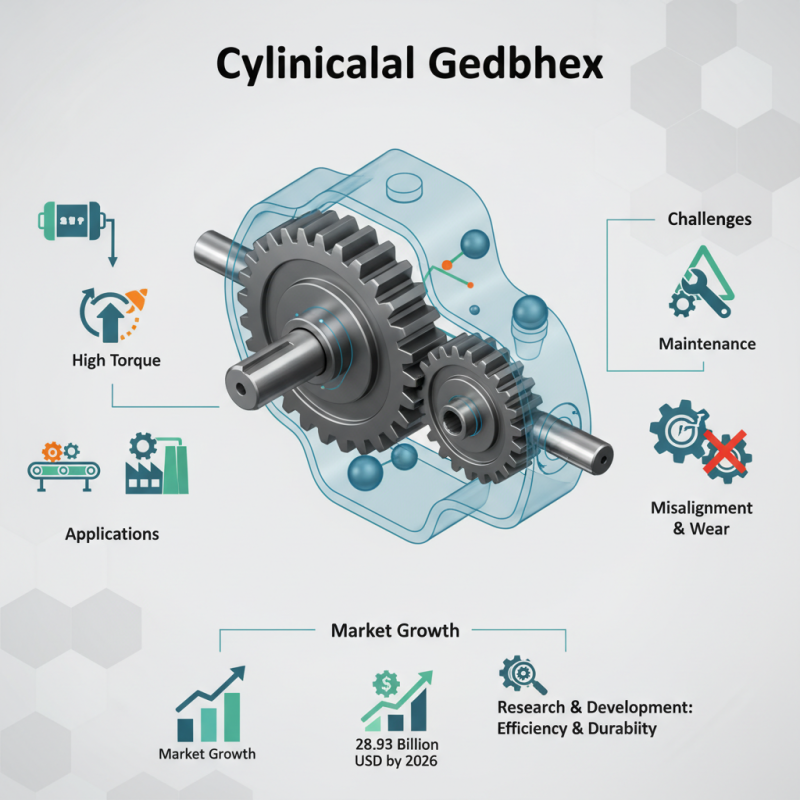
A cylindrical gearbox is a critical component in many machines. It mainly consists of a cylindrical housing and gears that transfer torque and speed. These gearboxes are designed to convert the motor's energy into a usable format for various applications. They are widely used in industries such as manufacturing, automotive, and robotics.
Understanding its working principle is straightforward. The input gear engages with the output gear through a series of teeth, reducing or increasing speed. This transmission helps in achieving the necessary power and torque. Cylindrical gearboxes offer durability and efficiency. However, their alignment and maintenance are crucial for optimal performance.
Tips: Regular maintenance checks are vital. Inspect gear teeth for wear regularly. Misalignment can cause significant damage. Listen for unusual noises during operation; they may indicate a problem.
Remember, not all cylindrical gearboxes are the same. Variations exist for specific applications. Users should select the right gearbox based on load requirements and environmental factors. Consider the need for lubrication and cooling as well. Always document performance and issues for future reference, which aids in making informed decisions.
A cylindrical gearbox is an integral component in various machinery. Understanding its components can enhance insight into its function. At the core, the gearbox consists of several key parts. These include gears, shafts, bearings, and housing. Each plays a vital role in power transmission.
Gears are typically cylindrical and come in different sizes. They mesh with one another to transfer torque. Shafts connect the gears and help to align them. These components must endure significant stress. Bearing supports the shafts, reducing friction. It's essential for longevity. The housing protects the internal parts from external elements. This encapsulation is crucial for maintaining performance.
When examining a cylindrical gearbox, one can’t overlook potential flaws. Improper alignment of the gears can lead to premature wear. Manufacturing defects may also affect reliability. Regular maintenance is essential, but many neglect this aspect. Understanding these components fosters a better grasp of gearboxes and their industrial significance.
A cylindrical gearbox is a crucial component in various machines. Its design features cylindrical gears, allowing for efficient torque transmission. This type of gearbox is widely used in industries like automotive and robotics due to its compact structure and high efficiency.
The operation of a cylindrical gearbox relies on the meshing of gears. As one gear rotates, it drives another gear, converting rotational motion. This interaction reduces speed while increasing torque. The precise alignment of gears plays a significant role in its performance. Misalignment can lead to increased wear and potential failure.
Another key aspect is lubrication. Proper lubrication minimizes friction and heat generation during operation. Insufficient lubrication can result in breakdown and reduced lifespan. Regular maintenance and monitoring are essential for optimal performance. Understanding these elements ensures efficient operation and longevity of the gearbox.
This bar chart illustrates the efficiency of a cylindrical gearbox across different gear ratios. As the gear ratio increases, the efficiency tends to decrease due to increasing losses in the system.
Cylindrical gearboxes are essential in various industries due to their efficiency and reliability. These gearboxes find applications in manufacturing, automotive, and renewable energy sectors. In manufacturing, they are integral to conveyor systems and automated machinery. According to a report by ResearchAndMarkets, the global cylindrical gearbox market is expected to grow at a CAGR of 5.5% from 2021 to 2026. This growth reflects the rising demand for improved automation and advanced machinery.
In the automotive industry, cylindrical gearboxes are crucial for electric vehicles (EVs). They convert the motor's rotational energy into usable torque for driving. As EV production ramps up, the need for reliable gear systems increases. The International Energy Agency reported that EV sales surpassed 2.1 million units worldwide in 2020, showcasing a significant market shift that emphasizes gearbox efficiency.
Renewable energy applications, particularly in wind turbines, rely on these gearboxes for energy conversion. A wind turbine gearbox must withstand extreme conditions, making durability vital. A study published in the Journal of Renewable Energy highlighted that about 80% of gearbox failures in wind turbines result from lubrication issues. This indicates the critical need for ongoing research and improvement in gearbox technology. Addressing these challenges can lead to better energy efficiency and reduced operational costs.
| Dimension | Value |
|---|---|
| Gear Ratio | 5:1 |
| Output Torque | 200 Nm |
| Input Speed | 1500 RPM |
| Output Speed | 300 RPM |
| Efficiency | 95% |
| Applications | Industrial Machinery, Robotics, Automotive Transmissions |
| Material | Steel Alloy |
| Weight | 25 kg |
Cylindrical gearboxes are widely used in various industries due to their efficient design. They use cylindrical gears to transmit torque and motion between shafts. However, they come with both advantages and disadvantages.
One major advantage is their high efficiency. This type of gearbox minimizes energy loss, which is crucial for performance. Additionally, cylindrical gearboxes are compact, making them suitable for tight spaces. Their ability to handle high loads is noteworthy. Yet, they can be complex to manufacture, leading to higher costs. Not all designs are optimal, and sometimes they require better material choices.
When considering a cylindrical gearbox, keep the application in mind. Think about load requirements. Larger loads may lead to potential failures. Proper maintenance is essential for longevity. Check gear wear regularly. This can save time and cost in the long run. Additionally, noise levels must be considered. Some designs may produce unwanted sound.
For a successful installation, ensure precise alignment. Misalignment can cause premature wear. Finally, don't overlook lubrication. It plays a critical role in maintaining efficiency. Regularly check lubricant levels. This simple step can prevent costly repairs.