#4 – 20133 102nd Avenue, Langley, B.C. V1M 4B4 Canada

#4 – 20133 102nd Avenue, Langley, B.C. V1M 4B4 Canada
Choosing the right Odorless Silicone Tube is more than comparing product photos or selecting the lowest price. The tube may carry air, water, food ingredients, or sensitive fluids. Each application demands different performance.
A reliable choice begins with the working environment. Check the expected temperature, pressure, flexibility, inner diameter, and exposure to oils or cleaning agents. A tube placed near a hot pump needs stable heat resistance. One used with a peristaltic system needs consistent flexibility and strong recovery. Wall thickness also matters. Thin walls bend easily, while thicker walls may resist collapse better.
Odor is another practical concern. A truly low-odor tube should not release a strong rubbery smell after unpacking or during normal use. Yet “odorless” is not always absolute. Manufacturing conditions, storage, and surrounding chemicals can affect perception. This detail is easy to overlook. Request material information, test samples, and relevant compliance documents from the supplier. For food, medical, or laboratory applications, verify the required standards for your market rather than relying on vague marketing language.
Look closely at the surface. It should feel smooth, clean, and free from bubbles, cracks, or uneven coloring. Measure the tube instead of trusting a printed size alone. Small dimensional errors can cause leakage at fittings. A dependable supplier should explain silicone grade, hardness, tolerance, temperature range, and testing methods clearly. Good documentation builds confidence. Still, independent testing may be worthwhile for critical systems. The ideal Odorless Silicone Tube balances safety, durability, fit, and total operating cost—not appearance alone.
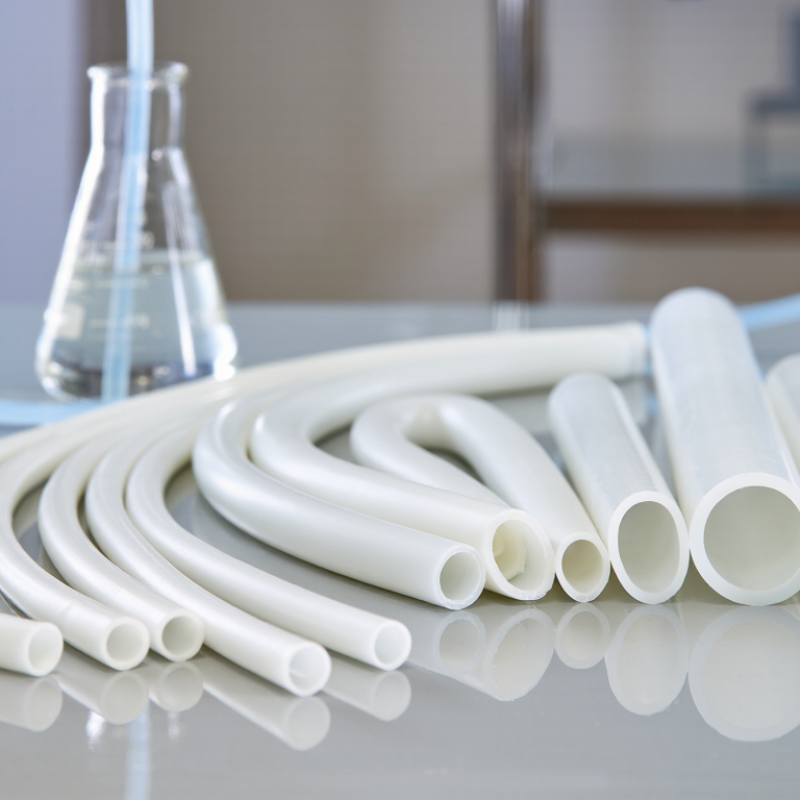
An odorless silicone tube begins with its chemistry, not a fragrance added later. High-purity silicone polymers contain few low-molecular-weight residues when properly processed. The curing system matters. Platinum-cured silicone usually leaves less odor than poorly controlled peroxide curing. However, platinum curing alone does not prove odorless performance. Mixing accuracy, mold cleanliness, curing temperature, and post-curing time all affect the result. A tube may smell neutral in a warehouse, then release a faint odor when warm. Heat reveals problems. In practical inspections, I check the tube after cutting, bending, and warming it gently. A sharp smell can indicate residual volatiles, processing contamination, or unsuitable packaging. That check is useful, but it is not a laboratory test.
Reliable selection requires evidence. Ask for material specifications, curing information, batch traceability, and test reports for volatile compounds or extractables. If the tube carries air, water, or sensitive fluids, test a sample under its real temperature and pressure range. Odor can come from additives, pigments, release agents, or nearby packaging. Transparent tubing is not automatically purer. Neither is a higher price. Look for stable walls, a clean cut, and no oily film after storage. Sensory testing should involve several trained reviewers, because people notice odors differently. Independent testing adds confidence for medical, food-contact, or laboratory applications. Still, reports can be outdated. Request a current batch sample. “Odorless” is often a practical threshold, not an absolute absence of molecules. That distinction deserves attention.
| Selection Dimension | Recommended Requirement | Why It Matters for Odor | What to Verify |
|---|---|---|---|
| Silicone Type | Platinum-cured silicone | Platinum-cured silicone generally produces fewer residual odor compounds than many peroxide-cured formulations because it does not rely on organic peroxide decomposition products. | Request the curing method and technical data sheet. Do not rely only on the term “silicone tube.” |
| Curing and Post-Curing | Use tubing that is fully cured and, when required, post-cured according to the manufacturer’s validated process. | Incomplete curing or insufficient heat treatment can leave volatile residues that may be noticeable as odor, especially in enclosed spaces or warm applications. | Ask for curing conditions, post-curing conditions, and batch release criteria. |
| Volatile Residues | Choose a formulation with a documented low-volatile or low-extractables specification appropriate for the application. | Low-molecular-weight siloxanes and other volatile residues can migrate from the tube and contribute to odor or surface deposits. | Review total volatile content or extractables testing, including the test method and acceptance limit. |
| Odor Evaluation | The tube should pass a defined sensory odor assessment after conditioning at a specified temperature and time. | “Odorless” is not an absolute scientific condition. A controlled sensory test provides a practical way to compare odor intensity between samples. | Confirm sample size, conditioning temperature, exposure time, panel method, and rating scale. |
| Raw Material Purity | Use high-purity silicone with controlled pigments, additives, processing aids, and release agents. | Some additives and contaminants can create odor even when the silicone polymer itself has little detectable smell. | Request a material declaration, restricted-substance statement, and change-control policy. |
| Surface Cleanliness | The inner and outer surfaces should be free from oil, dust, mold-release residue, and packaging contamination. | Odor may originate from processing residue or packaging rather than from the silicone compound. | Inspect the tube after unpacking and test both the tube and its packaging separately when odor is critical. |
| Temperature Exposure | Evaluate odor after exposure to the highest expected service temperature, not only at room temperature. | Heat can accelerate the release of volatile substances and make a faint odor more noticeable. | Use a representative heat-aging or conditioning protocol based on the actual application. |
| Operating Temperature | Many silicone tubes are suitable for approximately −50°C to 200°C, but the exact range depends on the formulation and design. | A tube operating outside its validated temperature range may degrade, transfer more volatiles, or develop odor. | Verify the supplier’s continuous-use and short-term temperature ratings for the selected tube. |
| Application Contact | For food, beverage, medical, or pharmaceutical contact, select tubing with documentation specific to that contact type. | A general-purpose tube may not meet the extraction, biocompatibility, or cleanliness requirements of sensitive applications. | Request relevant declarations, extraction data, sterilization compatibility, and regulatory documentation. |
| Hardness and Wall Design | Select the required Shore A hardness and wall thickness without adding unnecessary fillers or reinforcement. | Hardness and construction affect flexibility, compression, permeability, and the amount of material available to release volatile residues. | Compare Shore A hardness, inner diameter, outer diameter, wall tolerance, and pressure rating. |
| Packaging and Storage | Use clean, low-odor packaging and store the tube in a cool, dry, well-ventilated area away from solvents and fragrances. | Silicone can pick up odors from nearby chemicals, inks, adhesives, cardboard, or plastic packaging during storage. | Check packaging materials, storage conditions, shelf life, and whether the tube is sealed immediately after production. |
| Batch Consistency | Choose a supplier that maintains batch-to-batch controls for raw materials, curing, cleaning, and odor performance. | Changes in catalyst level, pigments, processing conditions, or post-curing can alter odor even when the dimensions remain unchanged. | Request a certificate of analysis and confirm that odor-related specifications are included in quality control. |
Choosing the right odorless silicone tube starts with the application, not the word “odorless.” A clear tube can still be wrong. Identify what flows through it, including water, air, chemicals, or sensitive formulations. Record the fluid temperature, pressure, flow rate, and contact time. For medical or food-contact use, request documented extractables, biocompatibility, and hygiene testing. FDA guidance refers manufacturers to ISO 10993 when evaluating biological safety.
Then inspect the physical demands. A tube used beside a peristaltic pump needs strong flex-fatigue resistance. A drain line may need a larger bore and lower flow restriction. Measure the inner diameter carefully; a small error can reduce flow or increase pressure. Check working temperature, minimum bend radius, tensile strength, tear resistance, and compression set. ASTM D412 and ASTM D624 provide recognized methods for tensile and tear testing, although laboratory results may not perfectly match your equipment.
The market is growing quickly. Grand View Research estimated the global medical tubing market at about USD 9.3 billion in 2023, with projected growth near 9.5% annually through 2030. That growth reflects demanding applications, not just higher volume. Ask for lot traceability and a current certificate of analysis. Do not rely on smell alone. Even odorless silicone can release unwanted substances after sterilization, heating, or prolonged contact. Testing the actual tube with the actual fluid is slower, but skipping it is often the expensive mistake.
When selecting an odorless silicone tube, start with its material and curing method. Platinum-cured silicone usually offers lower residual odor and fewer extractable by-products. It suits beverage lines, laboratory equipment, and sensitive medical applications. Peroxide-cured silicone can perform well, but it may require thorough post-curing.
Ask for odor testing data, not just the word “odorless.” A faint smell may appear after the tube is sealed in warm packaging. This detail is easy to miss.
Certifications should match the actual use. For food contact, check relevant FDA or European food-contact requirements. For medical applications, review USP Class VI or ISO 10993 test results when applicable.
ISO 13485 usually covers the manufacturer’s quality system, not automatic approval of every tube. Request the exact certificate, test scope, production site, and material grade. A copied certificate proves little.
Look closely at traceability. Reliable suppliers should provide batch numbers, hardness, temperature limits, tensile data, and extractables information. Confirm that tests used the same formulation, color, size, and curing process as your order.
I have seen buyers accept a general report, then discover that the tested tube was different. That mistake can delay validation.
Ask for samples and inspect them after heating, rinsing, and repeated bending. Real performance is sometimes less perfect than the datasheet.
How to Choose the Right Odorless Silicone Tube?
Size and flexibility should match the system, not just the fitting. Measure the inner diameter, outer diameter, and wall thickness with calipers. A loose inner diameter may cause leaks, while excessive compression can restrict flow. ISO 37 testing shows how elastomer tensile behavior is measured, but real bending still depends on wall thickness and temperature. Softer tubing bends easily around a 25 mm corner, yet it may collapse under suction. I have seen this mistake in small pumps. The tube looked flexible, but the flow became unstable.
Temperature and chemical resistance require practical testing. Many silicone tubes tolerate roughly -60°C to 200°C, but this range varies by formulation, pressure, and exposure time. ASTM D2240 hardness testing can help compare materials, while ASTM D395 compression-set data indicates sealing performance after heat exposure. Silicone generally handles water, air, and many mild chemicals well. Strong solvents, concentrated acids, and oils may cause swelling. The 2023 Chemical Resistance Guide from a major elastomer testing association recommends checking weight change and dimensional change after immersion. One overlooked detail: odorless does not mean chemically inert.
Tips: Request a sample and run a seven-day test. Bend it repeatedly, heat it near the highest working temperature, and inspect for swelling, cracking, or odor. Record the fluid, pressure, temperature, and contact time. The result may challenge the datasheet—and that is useful. A tube that passes a short test may still fail after months of cycling.
Choosing an odorless silicone tube starts with testing, not appearance. A clear tube may still release volatile residues. Ask for GC-MS results, extractables data, and the production lot number. For medical or food-contact use, check compliance with FDA 21 CFR 177.2600, USP Class VI, or ISO 10993 requirements. The correct standard depends on the application.
Look closely.
Measure inner diameter, wall thickness, hardness, and tensile strength from several points. A reliable supplier should provide inspection records, certificates of analysis, and retained samples. ISO 2859-1 sampling can support consistent acceptance decisions. Do not accept “odorless” as a casual promise. Heat a sample, rinse it, and inspect the water for smell, haze, or oily residue. In practice, this simple check can reveal problems that a glossy certificate misses.
Supplier scale also deserves attention. Grand View Research valued the global silicone market at about USD 18.2 billion in 2022 and projected a 7.4% CAGR through 2030. Fast market growth can attract inexperienced converters. Audit their mixing records, curing controls, cleanroom practices, and change-notification process. Ask how rejected lots are isolated. Ask again. Some suppliers answer well but cannot show dated evidence. I would also compare three consecutive lots, because one successful sample proves very little. A small weakness remains: laboratory tests may not reproduce long-term compression, heat, or chemical exposure in your actual equipment.