#4 – 20133 102nd Avenue, Langley, B.C. V1M 4B4 Canada

#4 – 20133 102nd Avenue, Langley, B.C. V1M 4B4 Canada
Choosing the right Galvanized Closed Head Steel Drum begins with the material inside it. It also depends on filling temperature, storage time, closure design, and transport conditions. A drum that looks strong may still be unsuitable for a reactive product.
The global steel industry produced approximately 1.89 billion tonnes of crude steel in 2023, according to World Steel Association data. This scale supports steel packaging supply, but it does not guarantee consistent drum quality. Coating thickness, weld integrity, flange design, and internal cleanliness still require careful verification. The United Nations Recommendations on the Transport of Dangerous Goods also emphasizes performance testing for approved packaging. Buyers should therefore review specifications, test records, and supplier quality systems before purchase.
“Packaging is the science, art, and technology of enclosing and protecting products,” wrote packaging expert Walter Soroka. That principle remains practical here. The galvanized surface may improve corrosion resistance, yet it is not a universal shield. Humidity, acidic contents, alkaline contents, and damaged coatings can change performance. A small dent near the chime can matter.
Industry guidance from the International Steel Drum Association supports matching drum construction with product compatibility and handling requirements. Still, some decisions remain imperfect. Supplier brochures may omit coating variation. Laboratory results may not reflect years of outdoor storage. The safest choice combines verified testing, experienced inspection, and realistic use conditions. Look beyond appearance. Check the drum’s capacity, closure, lining requirements, stackability, and certification status before ordering.
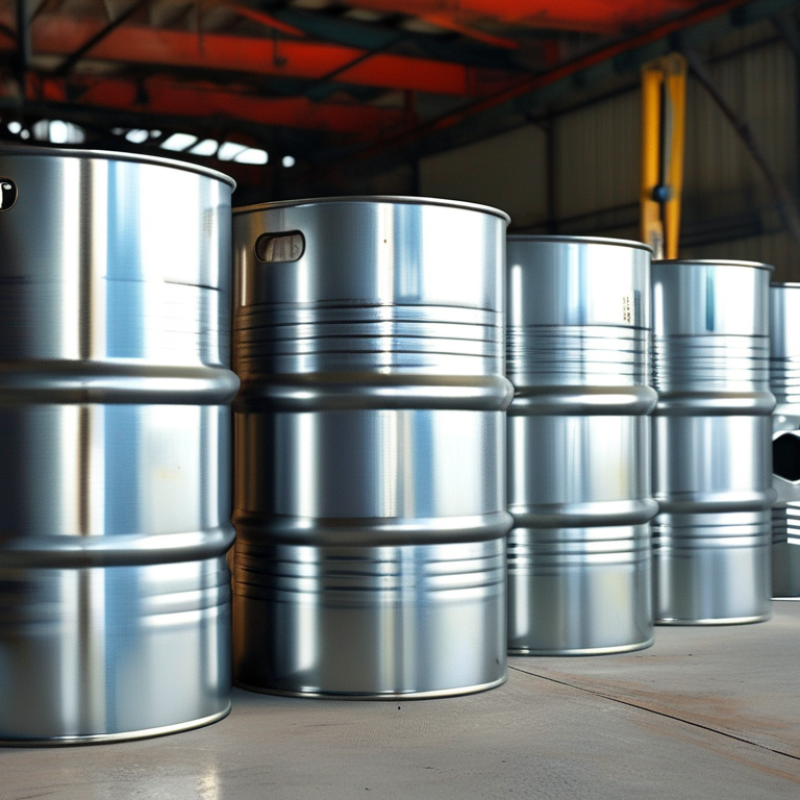
A galvanized closed head steel drum is a carbon-steel container with a zinc coating and a permanently fitted top. “Closed head” means the lid cannot be removed during normal use. Instead, contents enter through threaded openings, usually a larger bung and a smaller vent. The zinc layer protects exposed steel from moisture and surface corrosion. It is not a magic barrier.
The International Zinc Association reports that galvanized steel can remain serviceable for decades in suitable atmospheric conditions. Service life depends heavily on humidity, salt exposure, coating thickness, and surface damage. World Steel Association data also reports more than 680 million tonnes of steel recycled globally in 2022. This supports steel’s strong circularity advantage, although a drum still needs proper inspection before reuse. Dents, damaged bungs, rust around seams, or a distorted bottom can compromise performance.
When choosing one, check the steel gauge, zinc-coating specification, bung thread type, gasket material, and certified capacity. The United Nations packaging framework uses performance testing for drums intended to transport regulated materials, including drop, leakproofness, and hydrostatic pressure tests. A container marked with a UN performance code has passed defined tests, but the marking does not guarantee compatibility with every liquid. Strong acids, strong alkalis, and some water-based mixtures may attack zinc. I would verify the chemical compatibility chart and safety data sheet before filling. That step is easy to skip. It should not be.
Drum selection starts with the material, not the catalog size. ISO 15750-1 identifies common steel drum capacities, including 208.2 liters and 216.5 liters. These sizes look similar, but their height, diameter, and pallet fit can differ. A 208.2-liter drum should not be filled completely. Leave suitable headspace for thermal expansion, movement, and safe closure. For liquids, calculate volume using density. For example, 180 liters at 1.2 kg per liter weighs 216 kilograms before adding the drum’s tare weight. That may exceed your handling equipment’s safe limit.
Tips: Check the safety data sheet, filling temperature, density, and viscosity. Confirm the drum’s inner diameter before selecting pumps or liners. Measure the storage rack, pallet, and truck clearance too. The UN Model Regulations, 23rd revised edition, also require performance-tested packaging for regulated materials. Match the required performance level to the material and transport route. Do not assume galvanized steel suits every formula. Strong acids, strong alkalis, and high-moisture products may affect the zinc coating. A compatibility review is essential.
In practice, dimensions often create more trouble than capacity. A narrow drum saves floor space but may slow filling and cleaning. A wider drum improves stability but can reduce pallet efficiency. I have seen teams choose by liters alone, then discover the discharge opening is too low. That mistake is avoidable. Trial-fill one drum, weigh it, and inspect the closure after storage. Small differences matter.
Choosing a galvanized closed head steel drum requires more than checking its shiny surface. Galvanizing should appear even, without bare patches, heavy runs, peeling, or powdery residue. Inspect the chime, seams, and fittings closely. These areas often reveal rushed coating work.
Steel thickness affects handling strength and resistance to dents. Ask for measured thickness, not only a nominal gauge. Compare the specification with the drum’s intended load, stacking method, and transport conditions. A thicker wall is not always the best choice if the closure, seam, or fittings are weak. Check the lid seal, plug threads, and weld continuity. In routine inspections, small deformations near the rim deserve attention because they can prevent a reliable closure. I once focused too much on the coating and overlooked a damaged chime. That was a useful correction.
Tips: Request coating and thickness records. Examine several drums, not just one. Lightly inspect the inner surface for rust stains, dents, or loose scale. Confirm the closure operates smoothly without excessive force. Ask how the drum performed during drop, stacking, and leak-resistance testing. Testing details matter more than polished sales language. Also, consider storage temperature and repeated handling. A drum may pass a basic inspection yet fail after rough movement. Leave room for uncertainty, and document every visible defect before approval.
How to Evaluate Galvanizing, Steel Thickness, and Drum Durability
| Evaluation Dimension | Reference Data or Preferred Benchmark | How to Evaluate | Why It Matters for Durability |
|---|---|---|---|
| Nominal Drum Capacity | Common sizes include 20 L, 30 L, 60 L, 120 L, and 208 L. A 208 L drum is commonly described as a 55 U.S. gallon drum. | Confirm the nominal capacity, usable fill volume, external dimensions, and required headspace from the product specification. | Correct sizing prevents overfilling, reduces handling stress, and allows sufficient space for thermal expansion where required. |
| Closed Head Construction | The top should be permanently seamed or securely attached, with designated openings for plugs, bungs, or fittings. | Inspect the top seam, plug threads, gasket seating area, and closure torque requirements. Check that openings are compatible with the intended liquid or material. | A sound closed head reduces leakage, contamination, and deformation during transport and storage. |
| Galvanizing Method | Typical steel-sheet galvanizing is applied before drum forming. Common coating designations for galvanized sheet include G60 and G90 under ASTM A653/A653M, when specified by the supplier. | Request the coating designation, coating type, and applicable standard. Verify whether the coating is hot-dip galvanized, electrogalvanized, or another treatment. | Coating type and mass affect resistance to atmospheric moisture, handling damage, and early red-rust formation. |
| Zinc Coating Mass | For ASTM A653/A653M sheet designations, G60 represents approximately 203 g/m² total coating on both sides, while G90 represents approximately 305 g/m² total coating on both sides. | Check the material certificate or coating report. When necessary, use a calibrated magnetic coating-thickness gauge at multiple locations. | A higher and more uniform zinc coating generally provides a longer protective barrier, especially in humid storage environments. |
| Coating Uniformity | The coating should be continuous and free from exposed bare steel, severe scratches, peeling, blistering, or concentrated uncoated areas. | Inspect the body, top, bottom, seams, rolling hoops, plug areas, and handling-contact points. Measure several positions rather than relying on one reading. | Localized bare spots can become corrosion initiation points and may reduce service life even when the average coating value is acceptable. |
| Steel Thickness | Common drum body gauges are approximately 0.6–1.2 mm, depending on capacity, contents, stacking requirements, and regulatory design. | Verify nominal thickness from the technical drawing or mill certificate. Use a calibrated ultrasonic thickness gauge when incoming inspection is required. | Thicker steel generally improves resistance to denting, buckling, puncture, and deformation during palletizing and transport. |
| Bottom and Top Thickness | The bottom and top may use different gauges or reinforcements from the cylindrical body to withstand stacking and impact loads. | Review thickness values separately for the body, top, bottom, rolling hoops, and seam areas instead of accepting one overall thickness figure. | Weak top or bottom panels can fail under stacking loads even when the cylindrical wall appears sufficiently strong. |
| Seam Quality | The longitudinal seam and circular chimes should be continuous, uniform, and free from cracks, sharp edges, excessive wrinkles, or visible pinholes. | Perform visual inspection and, where appropriate, leak testing. Pay particular attention to the side seam, top seam, bottom seam, and chime transitions. | Seams are high-stress areas and common potential leak paths during impact, vibration, or pressure changes. |
| Leakproofness | For regulated dangerous-goods service, select a drum with the required UN packaging marking and performance level for the specific substance. | Check the complete UN marking, closure instructions, gasket material, and test documentation. Do not rely only on a visual inspection. | Leakproofness is essential for preventing product loss, environmental release, and hazards caused by incompatible or flammable contents. |
| Drop Resistance | UN performance packaging may be subject to drop testing at specified heights according to the applicable packing group and packaging type. | Confirm that the test report applies to the same drum design, capacity, closure system, and packing group required for the intended shipment. | Drop-test performance indicates the drum’s ability to withstand accidental impacts during loading, unloading, and transportation. |
| Stacking Resistance | The drum should have a stable chime, reinforced top and bottom geometry, and a documented maximum stacking load or height. | Request the allowable stacking load and test method. Keep the load centered and follow the supplier’s stacking instructions. | Adequate stacking strength reduces buckling, closure damage, and loss of stability in warehouses and shipping containers. |
| Closure and Gasket Compatibility | Common closure components include threaded plugs, gaskets, and sealing washers made from materials selected for chemical compatibility. | Compare gasket and liner materials with the contents, temperature range, storage duration, and cleaning chemicals. Verify the specified tightening torque. | Even a strong drum can leak if the gasket swells, hardens, dissolves, or is incorrectly compressed. |
| Corrosion Environment | Galvanized steel is generally suited to dry or moderately humid atmospheric storage, but performance depends on exposure conditions and the stored material. | Assess humidity, salt spray, condensation, outdoor exposure, contact with acidic or alkaline substances, and possible galvanic contact with other metals. | Galvanizing is not a universal chemical barrier; aggressive environments may require an internal lining, different material, or additional protective coating. |
| Internal Lining Requirement | An internal lining may be necessary when the contents could react with zinc or steel, or when product purity must be maintained. | Review chemical compatibility data, immersion-test results, and the lining specification. Confirm that the lining is continuous and properly cured. | A suitable lining can reduce internal corrosion, contamination, odor transfer, and interaction between the contents and galvanized surface. |
| Dimensional Consistency | Drum height, diameter, bung spacing, chime profile, and pallet footprint should remain within the stated manufacturing tolerances. | Measure sample drums with calibrated tools and compare the results with the approved drawing or purchase specification. | Consistent dimensions improve pallet stability, automated handling, closure fit, warehouse utilization, and stacking safety. |
| Surface and Handling Safety | The exterior should be free from sharp burrs, loose zinc flakes, severe dents, unstable chimes, and damage that compromises handling. | Inspect the complete exterior, including rolling hoops, bottom rim, top rim, and plug openings. Segregate drums with structural dents or damaged closures. | Safe edges and stable geometry reduce worker injury risk and help prevent punctures, tipping, and secondary damage. |
| Documentation and Traceability | A robust specification should identify steel grade, nominal thickness, coating type, coating mass, capacity, closure details, test results, and production lot. | Request a certificate of conformity, material certificate, inspection records, and applicable UN test documentation before approval. | Traceability supports quality control, regulatory compliance, failure investigation, and consistent repeat purchasing. |
| Recommended Selection Priority | Select based on contents and regulations first, then evaluate coating, steel thickness, closures, leakproofness, drop resistance, and stacking performance. | Use a written acceptance checklist and compare identical test criteria across samples. Avoid choosing only by lowest purchase price or nominal capacity. | A balanced specification provides better lifecycle value and lowers the risk of leakage, corrosion, handling damage, and rejected shipments. |
Reference values are general industry evaluation guidelines rather than universal requirements. Final selection should be based on the stored contents, applicable transport regulations, required packing group, storage conditions, and the drum manufacturer’s verified technical documentation.
Start with the closure. A bolt-ring closure suits repeated access and offers a firm, even seal. For frequent sampling, threaded bungs with compatible gaskets are usually more practical. Choose gasket material by temperature, pressure, and contents, not by price alone. Nitrile may suit many oils, while fluoropolymer options handle harsher chemical exposure. Small details matter. A mismatched gasket can leak even when the galvanized drum body looks excellent. Confirm bung dimensions and torque requirements before filling.
Lining decisions need equal care. An unlined drum can work for dry, nonreactive materials, but moisture may change that assessment. Epoxy-phenolic linings can add protection, yet they must be tested against the actual contents. Do not assume a thicker coating is automatically safer. Request compatibility data, coating inspection results, and batch traceability. Certification should match the application. Check manufacturing quality records, relevant transport-performance approval when required, and food-contact documentation when applicable. Inspect the closure, lining, and markings on arrival. Paperwork can look complete while handling exposes weak points. I would revisit any specification that lacks clear test conditions, because “suitable” is rarely universal.
Feature-priority guide for selecting the closure, lining, and certification combination
Choosing a galvanized closed head steel drum requires more than comparing unit prices. The World Steel Association reported 1.892 billion tonnes of crude steel production in 2023. That scale does not guarantee stable drum costs. Steel grade, coating weight, wall thickness, closure design, and regional freight can change the final price.
Ask each supplier for a clear landed-cost breakdown. Include the drum, gasket, plugs, pallet, testing, freight, and storage. Request recent certificates for dimensions, coating, and pressure performance. Check whether the closed head fits your filling line.
A cheap drum may create higher labor costs when closures leak or pallets arrive damaged. I would also compare sample quality, not only spreadsheets. One sample is not enough.
Safe handling needs equal attention. The U.S. Bureau of Labor Statistics recorded 5,283 fatal work injuries in 2023. This national figure is not drum-specific, but it shows why routine lifting deserves controls.
Confirm the drum’s certified use, contents compatibility, and stacking limits. Keep it upright, dry, and away from heat or impact. Use suitable drum lifters, gloves, eye protection, and approved bonding methods where applicable.
Do not roll a full drum by hand. Labels must remain readable during storage and transport.
Requirements vary by destination and material, so ask a qualified safety professional to review the specification. Suppliers often provide guidance. It may still be incomplete.