#4 – 20133 102nd Avenue, Langley, B.C. V1M 4B4 Canada

#4 – 20133 102nd Avenue, Langley, B.C. V1M 4B4 Canada
China’s welding sector is expanding with manufacturing automation, infrastructure investment, and rising demand for consistent metal joining. A Gas Metal Arc Welder remains central to this shift. It supports continuous wire feeding, stable arc control, and efficient production on steel and aluminum components.
MarketsandMarkets projects the global welding equipment market to grow from approximately USD 8.3 billion in 2023 to USD 10.5 billion by 2028. Its analysis identifies automation, digital controls, and advanced arc processes as important growth factors. The International Federation of Robotics reported 541,302 industrial robot installations worldwide in 2023. Many serve automotive and metal fabrication lines. These figures suggest stronger demand for reliable, automation-ready welding systems. They do not prove that every Chinese manufacturer offers equal performance.
John C. Villafuerte, a recognized welding technology specialist, describes GMAW as “a process in which an arc is established between a continuously fed consumable wire electrode and the workpiece.” That simple principle becomes demanding on a busy factory floor. Wire speed, shielding gas, duty cycle, cooling, and service response all affect results. A polished brochure cannot replace field experience.
This introduction examines China’s top ten Gas Metal Arc Welder manufacturers through practical criteria. These include product range, control technology, welding stability, certification, export capability, and after-sales support. Public information is uneven. Some specifications require closer verification. That is worth admitting.
The strongest suppliers usually combine robust machines with usable documentation and responsive technical support. Buyers should compare actual weld samples, not only catalog numbers. Small details matter. A clean bead matters.
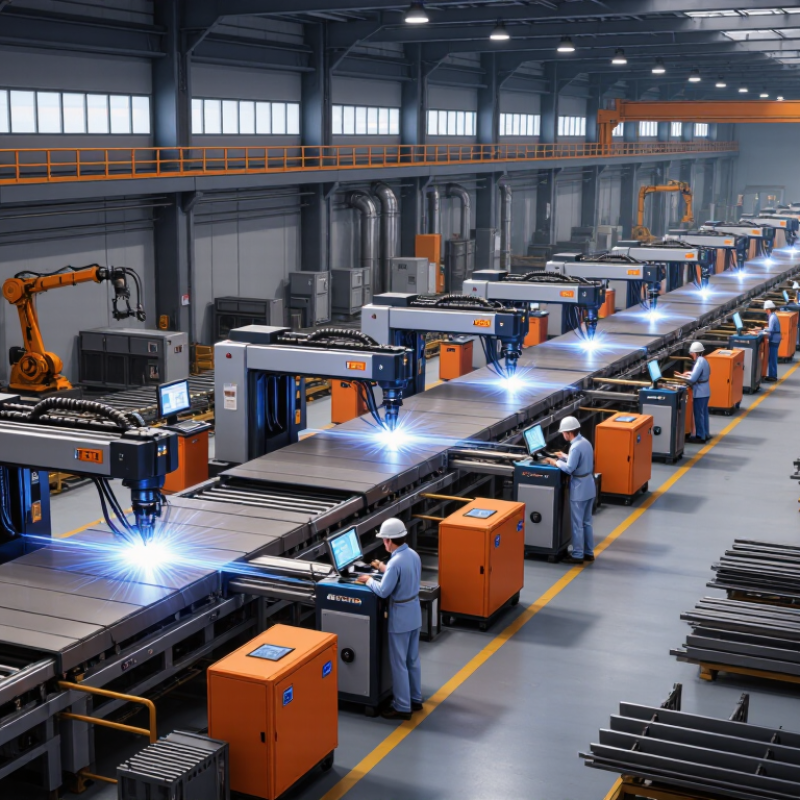
A gas metal arc welder joins metal by creating an electric arc between a continuous wire electrode and the workpiece. Shielding gas protects the molten pool from atmospheric contamination. This process is commonly called GMAW or MIG welding. It supports carbon steel, stainless steel, and aluminum production.
In a factory, the welder controls wire speed, voltage, current, and gas flow. These settings shape penetration, bead appearance, and production speed. A stable arc can reduce spatter and limit post-weld cleaning.
On an automotive frame, for example, consistent wire feeding helps create repeatable joints across hundreds of assemblies. Fixtures also improve accuracy by holding parts at fixed angles.
Operators still need practical judgment. A clean nozzle does not guarantee a sound weld. Drafts, rust, poor grounding, or incorrect torch distance can cause porosity. Small details matter. I have seen a minor liner blockage produce uneven feeding and inconsistent beads. That assumption can fail.
Reliable equipment should offer steady output, accessible controls, durable feeding components, and clear maintenance procedures. Safety features also matter, including thermal protection, overload control, and suitable ventilation requirements. Buyers comparing manufacturers in China should examine testing records, service capability, replacement-part access, and operator feedback. Factory demonstrations can reveal arc stability more clearly than a specification sheet. Performance claims deserve verification under actual production conditions.
China’s leading GMAW manufacturers increasingly combine inverter power sources with digital waveform control. High-frequency switching improves energy use, arc stability, and equipment response. Many systems now support synergic MIG/MAG modes, matching voltage and wire speed automatically. This reduces setup errors during steel, stainless steel, and aluminum welding.
Automation is another major technology driver. The International Federation of Robotics reported 276,288 industrial robot installations in China during 2023, representing about 51% of global installations. This growth supports robotic GMAW cells with seam tracking, real-time current feedback, and programmable torch paths. Closed-loop wire feeders can detect speed changes and correct them within milliseconds. Thermal sensors also help protect power modules during long production cycles.
Connectivity is becoming practical, not decorative. Industrial Ethernet, remote diagnostics, and welding data logging help supervisors trace current, voltage, gas flow, and duty cycle. IEC 60974-1 remains an important reference for arc-welding equipment safety and performance. ISO 5817 guides visual quality levels for welded joints. However, digital displays do not guarantee better welds. A poorly calibrated feeder still creates unstable metal transfer. Some manufacturers also overstate efficiency without showing test conditions. Buyers should request independent duty-cycle results, waveform data, and service records. Small details matter.
China’s Top 10 Gas Metal Arc Welder Manufacturers represent a competitive manufacturing sector serving construction, fabrication, automotive repair, and industrial maintenance. The strongest suppliers usually offer MIG and MAG welding systems for steel, stainless steel, and aluminum applications. Their product ranges may include compact workshop machines, pulse welders, and automated production units.
A practical evaluation begins with welding performance, not catalogue language. Experienced buyers should check stable arc control, wire feeding accuracy, duty cycle, and thermal protection. A reliable machine should maintain a steady arc at common wire diameters, such as 0.8, 1.0, and 1.2 millimeters. Digital displays help operators adjust voltage and amperage quickly. Some manufacturers also provide synergic control, IGBT power modules, and programmable welding parameters.
Factory experience matters.
Quality evidence should include load testing, insulation checks, sample welds, and traceable component records. Export support is also important, especially for manuals, spare parts, packaging, and technical training. However, no ranking remains perfect for every buyer. A supplier with strong heavy-duty equipment may not suit a small repair shop. Product claims can also look better than real workshop performance. Requesting trial units and independent inspection remains a sensible step before placing a large order.
Typical GMAW operating-current benchmarks by solid welding-wire diameter. The figures represent widely used industry specification ranges and do not disclose company or brand data.
Larger wire diameters generally require higher welding currents and are commonly selected for thicker materials and heavier-duty fabrication.
China’s top ten gas metal arc welder manufacturers cover compact MIG units, industrial inverter welders, pulse systems, and automated welding cells. This range serves repair workshops, steel fabrication plants, vehicle production, agricultural equipment, and structural projects. Compact models often suit thin sheet and maintenance work. Heavy-duty machines provide higher duty cycles for long production runs. Some systems include synergic controls, digital displays, remote settings, and programmable wire-feed options.
Performance depends on more than output amperage. In practical testing, arc stability, wire-feed accuracy, thermal protection, and response under changing loads matter greatly. A reliable welder should produce consistent beads with limited spatter.
Cooling design also affects daily productivity. However, no machine wins every shop. A pulse system may improve aluminum work but require better operator training. A low-cost unit can appear efficient, yet weak service support may create delays. This is where manufacturer experience and documented quality procedures become important.
Tips: Match the welder to material thickness, wire size, shielding gas, and duty cycle. Ask for test welds before purchase. Check spare-part access and local technical support. Inspect cable connections after repeated use. Even experienced teams sometimes overlook ventilation and grounding requirements. That mistake can affect weld quality and equipment life. Evaluate real production samples, not only catalogue ratings.
Selecting a Chinese GMAW manufacturer requires more than comparing quoted prices. Start by checking production capability, not catalog size. Ask for factory photos, equipment lists, and a recent production schedule. A credible supplier should explain wire-feed accuracy, duty cycle testing, and transformer or inverter quality. Request serial-number traceability for core components. These details reveal whether the factory builds machines or only assembles them.
Run a documented welding trial using your actual wire diameter, shielding gas, and plate thickness. Measure arc stability, spatter, bead appearance, and thermal performance after extended operation. Ask for test records, calibration dates, and acceptance criteria. Do not rely on a short demonstration. A machine may weld smoothly for five minutes, then overheat during a factory shift. This is where many evaluations become too optimistic. Check compliance documents for the destination market, and verify them with issuing bodies when practical.
Supplier reliability also depends on engineering response. Evaluate sample revisions, spare-part availability, software support, and response times across several weeks. Clarify warranty scope, repair procedures, packaging, lead times, and minimum order quantities in writing. A video call with technicians can expose practical knowledge quickly. Ask how they diagnose unstable feeding or poor grounding. Vague answers deserve caution. Price still matters, but a lower quote can conceal weaker cooling systems, limited testing, or expensive replacement parts. Keep a scoring sheet and record every unanswered question. It is less glamorous, but more dependable.
| Rank | Anonymous Manufacturer Profile | Primary Production Region | GMAW Product Range | Rated Output Range | Duty-Cycle Evidence | Applicable Standards to Verify | Quality-System Evidence | Customization Capability | Export Readiness | Warranty Benchmark | Evaluation Score |
|---|---|---|---|---|---|---|---|---|---|---|---|
| 1 | Profile A — Industrial Integrated Systems | East China | Inverter MIG/MAG, synergic GMAW, pulse GMAW, wire feeders | 200–500 A | Request test report at 40°C ambient temperature | IEC 60974-1, IEC 60974-10, applicable regional EMC requirements | ISO 9001 certificate and incoming-component inspection records | High; control panels, voltage ranges, feeders, cable packages | Strong documentation, export packaging, multilingual manuals | 12–24 months, subject to contract | 92/100 |
| 2 | Profile B — Heavy-Fabrication Specialist | North China | Heavy-duty MIG/MAG, multi-process welders, engine-driven accessories | 300–630 A | Verify thermal protection and continuous-load performance | IEC 60974-1, IEC 60974-5 where applicable, EMC compliance | ISO 9001 and documented final-load testing | Medium to high; industrial configuration and feeder options | Experience with container loading and industrial spare parts | 12 months minimum recommended | 89/100 |
| 3 | Profile C — Automated Welding Supplier | Central China | Synergic GMAW, pulse systems, robotic welding power sources | 250–500 A | Require robot-integration and arc-stability trial data | IEC 60974-1, IEC 60974-10, machine-interface requirements | ISO 9001, process traceability, calibration records | Very high; communication interfaces and welding programs | Strong technical support; integration capability must be audited | 12–18 months, project dependent | 87/100 |
| 4 | Profile D — Construction Welding Equipment Maker | Southwest China | Portable MIG/MAG, compact multi-process machines | 160–350 A | Verify duty cycle, generator compatibility, and IP rating | IEC 60974-1, IEC 60974-10, applicable ingress-protection testing | ISO 9001 or equivalent documented production controls | Medium; private labeling and input-voltage adaptation | Good standard export process and replacement-part catalog | 12 months minimum recommended | 84/100 |
| 5 | Profile E — OEM and Private-Label Producer | East China | Entry-level and professional MIG/MAG, OEM assemblies | 140–400 A | Sample validation required before volume production | IEC 60974-1 and destination-market safety and EMC rules | Verify ISO 9001 scope and production-site ownership | Very high; artwork, packaging, manuals, and electrical options | Suitable for private-label programs with agreed inspection plans | 12 months, negotiated by order | 82/100 |
| 6 | Profile F — Cost-Competitive Generalist | South China | MIG/MAG, MMA, TIG and plasma combination units | 160–400 A | Independent load test and component-temperature records needed | IEC 60974-1 and applicable electrical-safety requirements | Request current certificate, audit report, and defect-rate data | Medium; standard models with limited engineering changes | Adequate for standard products; verify after-sales coverage | 12 months recommended | 79/100 |
| 7 | Profile G — Rural and Repair-Shop Equipment Supplier | Northwest China | Compact MIG/MAG and basic manual welding equipment | 120–300 A | Confirm actual output using an independent test laboratory | IEC 60974-1 and destination-market certification requirements | Basic quality records; factory audit strongly recommended | Low to medium; mainly standard configurations | Best suited to distributors with local technical support | 6–12 months, contract dependent | 76/100 |
| 8 | Profile H — Small-Batch Engineering Factory | Central China | Customized MIG/MAG, special-voltage and low-volume machines | 180–350 A | Pilot-batch testing and heat-cycle validation required | IEC 60974-1 and customer-specified safety standards | Verify calibration, traceability, and change-control procedures | High for low-volume projects; capacity must be checked | Suitable for technically managed projects | 12 months recommended | 74/100 |
| 9 | Profile I — Entry-Level Volume Producer | South China | Compact MIG/MAG and hobby-to-light-industrial machines | 120–250 A | Verify rated current, duty cycle, and thermal cut-out operation | IEC 60974-1, EMC testing, and market-specific safety rules | Factory inspection and pre-shipment sampling recommended | Medium; standard models and packaging customization | Competitive for container orders; spare-parts planning essential | 6–12 months, negotiated by contract | 71/100 |
| 10 | Profile J — Newer Export-Oriented Manufacturer | East or South China | Digital MIG/MAG and multi-process product families | 160–400 A | Require third-party performance testing before approval | IEC 60974-1, IEC 60974-10, and destination-market regulations | Verify certificate validity, factory ownership, and production history | Medium to high; product development capability requires validation | Potentially strong; confirm export references and service response times | 12 months recommended | 68/100 |