#4 – 20133 102nd Avenue, Langley, B.C. V1M 4B4 Canada

#4 – 20133 102nd Avenue, Langley, B.C. V1M 4B4 Canada
Choosing among the 7 Best Fiber Laser Diode Suppliers for Global Buyers requires more than comparing catalog prices. Buyers must examine wavelength stability, coupling efficiency, thermal control, testing records, and long-term support.
The market is expanding. MarketsandMarkets estimates that the global fiber laser market could grow from approximately USD 7.3 billion in 2023 to USD 10.1 billion by 2028. Its analysis points to strong demand from metal processing, electronics, medical equipment, and communications. Grand View Research also identifies rising industrial automation as a major growth driver. These figures describe fiber lasers broadly, not every Fiber Laser Diode segment. That distinction matters.
Small specifications create large consequences.
A diode operating near 976 nanometers may support high-power pumping, while poor thermal management can shorten service life. Experienced procurement teams therefore request aging data, optical output curves, packaging details, and failure-rate evidence. Supplier location also affects calibration support, delivery risk, and replacement planning.
Valentin Gapontsev, founder of IPG Photonics, once described fiber lasers as “becoming the workhorse of industrial lasers.” The statement remains persuasive, although it can oversimplify today’s supply chain. No single supplier fits every application. A research laboratory may value customization, while a factory may prioritize repeatability and field service.
This guide compares seven established suppliers using technical capability, manufacturing experience, documented quality systems, global reach, and buyer feedback. The comparison is not perfect. Public data can be incomplete, and supplier performance may vary by model, region, and production batch. Use the shortlist as a practical starting point, then verify specifications directly before placing an order.
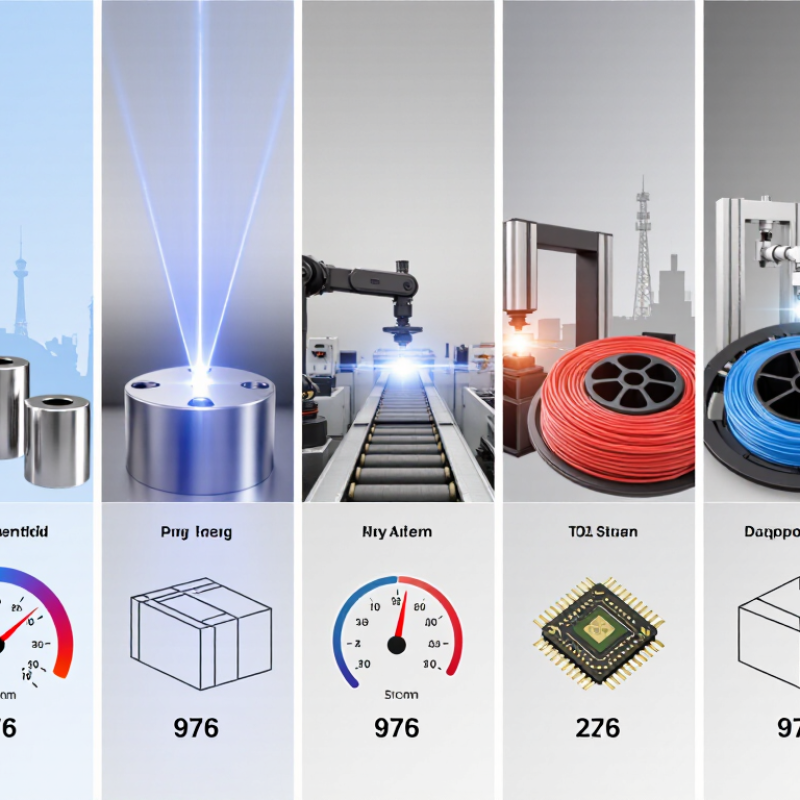
Fiber laser diodes are semiconductor light sources used to pump fiber lasers. They convert electrical energy into concentrated optical energy. The diode usually emits near-infrared light, commonly around 915 or 976 nanometers.
Inside the device, an electrical current passes through a semiconductor junction. This process releases photons with similar wavelengths and directions. Lenses then couple the light into an optical fiber. The fiber carries pump energy into a doped gain section, often containing ytterbium ions. These ions absorb the pump light and release stronger laser light through stimulated emission. Mirrors or fiber Bragg gratings help maintain amplification and control the output beam. The process is efficient, but not perfectly so. Heat, coupling loss, and wavelength drift can reduce performance.
Tips: Check output power, wavelength stability, cooling design, fiber compatibility, and operating lifetime. Ask for test data, not only catalogue values. A practical review should include performance at different temperatures. This detail is often missed. Also inspect connector quality and protection against dust. Small contamination can weaken coupling and shorten service life. For global purchasing, confirm documentation, safety testing, warranty terms, and technical support. A lower price may look attractive, yet unstable output can create higher maintenance costs. Real application testing remains the most reliable comparison method.
| Supplier Category | Typical Emission Wavelength | Typical Output Range | Common Package or Coupling | Cooling Method | Typical Applications | Key Buyer Evaluation Points |
|---|---|---|---|---|---|---|
| 1. Single-Emitter Diode Supplier | Around 780–980 nm | Approximately 0.5–10 W per emitter | Standard submount, butterfly, or compact diode package | Conduction cooling or heat-sink mounting | Low-power marking, sensing, spectroscopy, and laboratory systems | Wavelength tolerance, spectral width, lifetime data, and thermal resistance |
| 2. Laser Diode Bar Supplier | Typically 780–980 nm | Approximately 20–100 W per bar | 10-emitter or multi-emitter bar mounted on a submount | Water-cooled or conduction-cooled assemblies | Pumping, material processing, medical equipment, and illumination | Emitter uniformity, bar efficiency, smile or curvature, and cooling compatibility |
| 3. Fiber-Coupled Module Supplier | Commonly 808, 915, 940, or 976 nm | Approximately 10–400 W per module | Multimode delivery fiber, often 105–400 μm core | Water-cooled or thermally managed baseplate | Fiber-laser pumping, cladding pumping, welding, and brazing | Coupling efficiency, fiber numerical aperture, connector type, and power stability |
| 4. High-Power Pump Module Supplier | Usually 915 or 976 nm for ytterbium-doped fiber pumping | Approximately 400 W to more than 1 kW per assembly | Fused-fiber, multi-emitter, or combined pump module | Closed-loop liquid cooling is generally required | High-power industrial fiber lasers and directed-energy research | Power density, reliability under continuous operation, cooling flow, and service support |
| 5. Pulsed or QCW Diode Supplier | Commonly 808–980 nm | High peak power from tens to hundreds of watts | Bar, stack, or fiber-coupled pulsed module | Heat sink, thermoelectric, or liquid cooling | Hair removal, dermatology, pumping, and pulsed material treatment | Pulse width, repetition rate, peak current, duty cycle, and junction-temperature limits |
| 6. Precision Red or Near-Infrared Diode Supplier | Approximately 635–690 nm or 1060–1550 nm | Typically milliwatts to several watts | TO-can, butterfly, or single-mode fiber-coupled package | Passive cooling or thermoelectric temperature control | Metrology, alignment, communications, medical sensing, and instrumentation | Mode quality, linewidth, wavelength stability, noise, and connector cleanliness |
| 7. Customized Integrated Diode-System Supplier | Selected to match the fiber, gain medium, or process | Configured from low-power units to multi-kilowatt systems | Integrated diode, optics, fiber, driver, sensors, and housing | Thermoelectric, forced-air, or closed-loop liquid cooling | OEM machinery, automated production lines, research platforms, and turnkey laser systems | Engineering customization, compliance documents, warranty terms, lead time, and global logistics |
When evaluating global fiber laser diode suppliers, technical fit should lead the shortlist. MarketsandMarkets estimates that the global laser diode market will grow strongly through 2028, driven by communications, manufacturing, and sensing. This growth attracts capable suppliers, but also uneven quality. Check wavelength accuracy, optical output, beam divergence, coupling efficiency, and lifetime data. Ask for test conditions, not only headline specifications. A diode rated at 25°C may perform differently inside a sealed industrial module.
Reliability evidence matters more than polished websites. Review ISO 9001 certification, traceability records, accelerated aging methods, and failure-rate reporting. For telecom applications, request qualification evidence aligned with Telcordia GR-468. For safety controls, verify compliance with IEC 60825-1 and applicable regional requirements. Industry analysts at Fortune Business Insights also identify rising demand for high-power and precision laser systems, increasing the need for stable thermal management. Suppliers should explain junction temperature limits, burn-in procedures, and warranty exclusions clearly. Vague answers are warning signs.
Tips: Compare three suppliers using one scoring sheet. Include price, minimum order quantity, lead time, sample consistency, and technical support. Request five to ten samples before approval. Measure them independently. Keep an audit trail. No scorecard is perfect. A supplier with the lowest price may create higher calibration costs later. I would also check communication speed, because slow engineering replies can delay production more than shipping. Supplier claims deserve verification, even when the paperwork looks complete.
Recommended evaluation weighting for global buyers. Optical performance, reliability, and manufacturing consistency receive the highest priority because they directly affect laser output, uptime, and process stability.
The percentages represent a practical procurement scoring model and total 100%. Buyers can adjust the weighting according to application requirements, production volume, and regional compliance needs.
International buyers need more than a low unit price when selecting fiber laser diode suppliers. A practical shortlist should include seven supplier profiles: high-power industrial, telecom, medical, sensing, research, OEM-customized, and rapid-delivery specialists. Each profile serves different wavelength, power, coupling, and reliability requirements. MarketsandMarkets and Grand View Research reports indicate that the fiber laser market is expanding at roughly 10–12% annually through the decade. That growth increases supplier choice, but it also makes technical screening harder.
Evaluate every supplier through measurable evidence. Request L-I-V curves, wavelength tolerance, thermal resistance, lifetime testing, and burn-in records. IEC 60825-1 and applicable quality-management procedures should guide documentation checks. For international shipments, verify packaging against humidity, vibration, and temperature risks. A supplier with strong laboratory results may still lack stable export support. That gap is easy to miss. One imperfect point deserves attention: published lifetime figures often use controlled conditions, not a dusty factory with daily thermal cycling. Buyers should compare test methods, not only headline hours. Independent inspection or sample qualification can expose inconsistent batches before volume purchasing.
Tips: Ask for three production samples and test them under your actual drive current. Compare the spectral width after thermal cycling. Confirm traceability from wafer lot to final package. Check response times across several time zones. Industry reports provide useful market direction, but they cannot replace hands-on validation, service records, and clear warranty terms.
Choosing the seven best fiber laser diode suppliers requires more than comparing catalog prices. MarketsandMarkets estimated the fiber laser market at about US$4.2 billion in 2024, with growth toward US$7.4 billion by 2029. That expansion raises qualification pressure. Buyers should compare single-emitter and bar architectures, wavelength stability, optical power, wall-plug efficiency, and beam quality. Products for cutting may need different thermal control than modules used in sensing or communications. IEC 60825-1 compliance, lot traceability, and accelerated-life test data should be requested before volume orders.
Global support often separates a capable supplier from a convenient one. Review local application engineers, regional repair capacity, spare-diode policies, and documented response times. Yole Group’s 2024 photonics analysis highlights continuing demand across industrial processing, telecom infrastructure, and advanced sensing. This suggests suppliers need broader platforms, not one standardized package. Ask whether they provide custom fiber coupling, QCW options, sealed packages, and integration guidance. Supply-chain transparency matters too; a second-source plan can protect production when substrates or cooling components become scarce. Seven suppliers may look similar on paper. They rarely perform identically in thermal cycling. My own caution is simple: polished specifications can hide incomplete test conditions, and published lifetime figures may not match your duty cycle. Validate with samples, not promises.
Selecting the right fiber laser diode supplier starts with your application, not a catalog ranking. Define the required wavelength, optical power, fiber type, beam quality, and operating temperature. A supplier should explain how each specification affects cutting, sensing, pumping, or communications performance. Ask for test reports, coupling details, thermal limits, and expected lifetime. Vague answers deserve caution.
Compare several qualified suppliers using the same technical checklist. Review package design, cooling methods, burn-in procedures, and consistency between production batches. Request sample units before placing a large order. Measure twice. During evaluation, inspect power stability after extended operation, not only the initial output. Ask for raw data. Reliable suppliers can provide traceability, calibration information, and clear acceptance criteria without hiding behind impressive claims.
Technical support also matters after delivery. Confirm response times, replacement procedures, warranty terms, and engineering assistance for integration problems. A capable supplier should discuss connector alignment, heat sinking, drive current, and protection circuits in practical language. Check manufacturing experience and quality controls, but do not assume a long company history guarantees perfect products. I have seen technically attractive samples perform well while later batches varied more than expected. That uncomfortable possibility makes lot-to-lot verification essential. Choose a partner whose documentation, communication, and measured results remain consistent under real operating conditions.