#4 – 20133 102nd Avenue, Langley, B.C. V1M 4B4 Canada

#4 – 20133 102nd Avenue, Langley, B.C. V1M 4B4 Canada
Choosing the right Drip Hose in 2026 will require more than comparing prices. Global buyers must match hose design with crops, field size, water quality, pressure, climate, and maintenance capacity. A vegetable grower may prefer thin-wall inline hose for seasonal beds. A plantation operator may need durable round hose with pressure-compensating emitters. Flat drip hose can reduce transport volume, but it may demand careful installation and storage.
The details matter. Hard water can clog small emitters. Uneven fields can create inconsistent flow. Recycled water may require stronger filtration. Solar-powered farms may need low-pressure designs. These are not minor concerns. They affect yield, labor, and equipment life. Dr. Michael H. Dukes, a recognized irrigation researcher, has stated, “Drip irrigation is a management system, not merely a pipe.” That principle remains highly practical for international purchasing decisions.
No single hose fits every farm. Not even close. Buyers should examine emitter spacing, wall thickness, discharge rate, pressure range, UV resistance, filtration needs, and expected service life. They should also confirm technical support and replacement availability in the destination market. A low-cost hose can become expensive after repeated clogging or leakage. However, premium specifications do not guarantee better results without correct design and maintenance. This is where many evaluations become imperfect. Product brochures rarely show muddy filters, uneven pressure, or hurried installation. A reliable choice combines verified performance data, field experience, supplier accountability, and honest reflection about local conditions.
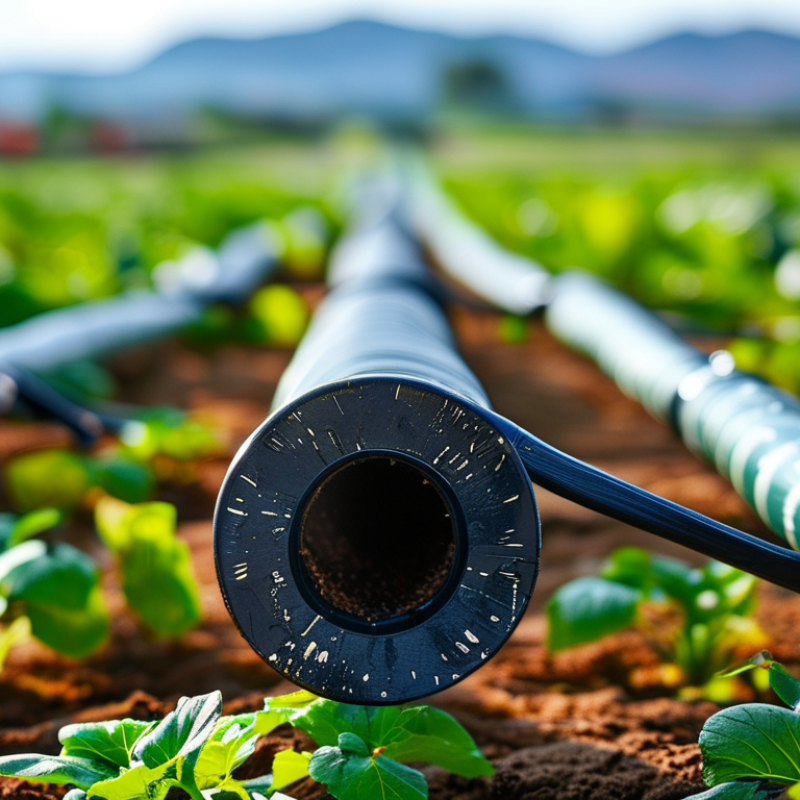
2026 Top Drip Hose Types: What Should Global Buyers Choose?
FAO irrigation guidance places well-managed drip systems near 90–95% water-application efficiency. That figure is impressive, but it is not automatic. Agriculture still accounts for about 70% of global freshwater withdrawals, according to FAO AQUASTAT. For buyers, efficient delivery is no longer only a cost issue. It is a resource-management decision.
Pressure-compensating drip hose suits uneven fields and long runs. Its emitters help maintain steadier flow when pressure changes. Non-pressure-compensating hose can work well on shorter, level beds. Thin-wall hose reduces transport weight, while thicker-wall products generally tolerate longer seasonal use. USDA NRCS irrigation guidance stresses filtration, pressure control, emitter spacing, and distribution uniformity before final selection.
Small details decide the result.
A blocked filter can ruin a strong design. Poor flushing can reduce output across an entire row. In dry regions, buyers should compare flow rate, wall thickness, working pressure, and repair methods under local water conditions. The 90–95% figure assumes proper installation and maintenance. Real farms may achieve less. I have seen specifications look excellent on paper, yet uneven pressure left dry patches near the field end. That gap deserves honest testing, not optimistic purchasing.
Flat, round, and porous drip hoses deliver water through different physical designs. Flat hoses remain collapsed during storage and expand when pressurized. They ship compactly. Their internal passage can widen unevenly, so pressure changes may affect discharge near the hose end. They suit seasonal vegetable beds, temporary irrigation, and projects needing fast installation. Installers should anchor them carefully, because twisting can restrict flow.
Round drip hoses keep a stable circular shape under pressure. Their flow path is more consistent, especially across longer rows with suitable pressure control. They work well in orchards, nurseries, and permanent greenhouse layouts. Yet, a round profile may require more storage space and stronger fittings. Poor filtration can still clog emitters. Shape alone cannot solve water-quality problems.
Porous hoses release water through tiny openings along the wall, creating a gentle, spreading wetting pattern. They are useful for flower beds, narrow planting strips, and mature roots that need slow moisture delivery. The wet line may become wider in heavy soil and narrower in sandy soil. That difference is easy to overlook. Global buyers should compare soil texture, row length, pressure range, filtration, UV exposure, and replacement access before choosing. In field trials, measuring discharge from the first and last outlets often reveals weaknesses that product sheets miss. I would not select by price alone; some low-cost hoses perform well, but their actual service life remains uncertain without local testing.
Emitter performance matters more than hose appearance. ISO 9261 defines requirements and test methods for agricultural emitters and emitting pipes. Buyers should request test results for discharge, pressure resistance, and dimensional stability. A printed flow rate is not enough.
The common 0.6–2.0 L/h range suits vegetables, orchards, and nursery crops. Lower flow reduces runoff in sandy beds. Higher flow can support wider root zones. However, flow depends on inlet pressure, water temperature, filtration, and elevation changes. Pressure-compensating emitters can improve uniformity, but only within their tested pressure range.
Check the curve.
FAO AQUASTAT reports that agriculture uses roughly 70% of global freshwater withdrawals. Small flow errors can therefore create costly waste across large fields. For each hose, compare measured discharge at several pressures, not one convenient point. Also inspect clogging behavior after filtration and repeated flushing. ISO 9261 helps create a reliable benchmark, yet it cannot replace field trials. That is an important limitation.
A practical purchasing file should include pressure limits, flow tolerance, wall thickness, filter requirements, and sample-test records. Buyers should also measure pressure at the farthest hose outlet. The first design may be wrong. Soil texture, slope, and crop spacing often expose that mistake.
2026 Top Drip Hose Types: What Should Global Buyers Choose?
Global Buyer Selection: Match Hose Type to Crop, Soil, Climate, and Scale
The right drip hose begins with the field, not the catalogue. FAO reports that agriculture uses about 70% of global freshwater withdrawals. Efficient delivery matters. USDA NRCS guidance commonly places well-managed drip systems near 90–95% application efficiency. Thin-wall drip tape suits seasonal vegetables and short production cycles. Thick-wall dripline better serves orchards, vineyards, and repeated installation. Pressure-compensating emitters help maintain uniform flow across sloping fields. They cost more, but uneven terrain can punish cheaper choices.
Soil changes the spacing decision. Sandy soil needs closer emitters and shorter irrigation cycles. Clay soil usually needs slower application and wider spacing. In hot, windy regions, buried or mulched lines can reduce surface evaporation. Yet subsurface systems demand careful filtration and flushing. One neglected filter can damage an entire block. Crop roots also matter. Shallow lettuce roots need frequent, light watering. Deep fruit-tree roots require longer, controlled cycles. These details sound obvious, but buyers often overlook them.
Tips: Test one field section before purchasing at scale. Measure pressure at the inlet and far end. Check emitter flow after filtration. For large farms, include fertigation, pressure regulation, and simple automation. For small farms, prioritize repairability and locally available connectors. The cheapest hose is not always economical. I have seen replacement labor cost more than the original material. Weather data helps, but field observation still catches mistakes. No report can fully replace a soil test and a farmer’s hand.
Global buyer selection: match hose type to crop, soil, climate, and farm scale
The chart compares typical planning characteristics for common drip hose types. Thin-wall drip tape is widely used for seasonal row crops and sandy soils, while thick-wall hose is better suited to orchards, vineyards, and multi-season use. Pressure-compensating hose is preferable on sloped fields or where irrigation pressure varies. Subsurface drip hose can reduce surface evaporation in hot, dry climates but requires careful filtration and maintenance.
Values are typical industry planning ranges: emitter flow is shown in liters per hour, recommended operating pressure in bar, and service life is expressed in seasons under proper filtration, flushing, and installation. Actual specifications vary by manufacturer and field conditions.
2026 Cost Metrics: Service Life, Water Savings, and Recyclability by Hose Type
Choosing a drip hose now requires more than checking purchase price. Thin-wall drip tape often costs less initially and works well for seasonal vegetable fields. Its service life may last one to three seasons, depending on filtration, sunlight, and installation care. Thick-wall hose usually lasts five to ten years. It costs more, but replacement labor can change the calculation.
Water savings also vary by design. Pressure-compensating emitters can deliver more even flow across long rows and uneven ground. In practical field use, well-managed drip systems may reduce water consumption by 20% to 40% compared with overhead irrigation. That range is not guaranteed. Clogged filters, excessive pressure, and poor scheduling quickly reduce performance. Small leaks matter.
Recyclability deserves equal attention. Some hoses use uniform polyethylene, which can simplify collection and processing. Multi-layer structures may improve strength but complicate recycling. Before purchasing, buyers should ask about material composition, take-back channels, and local recycling capacity. A hose that lasts longer is not automatically the greener option if it cannot be recovered. My own early cost comparisons focused too heavily on water savings. Disposal fees and labor were easy to miss. That mistake still affects many purchasing models. A spreadsheet cannot fully represent a cracked connector during harvest.